
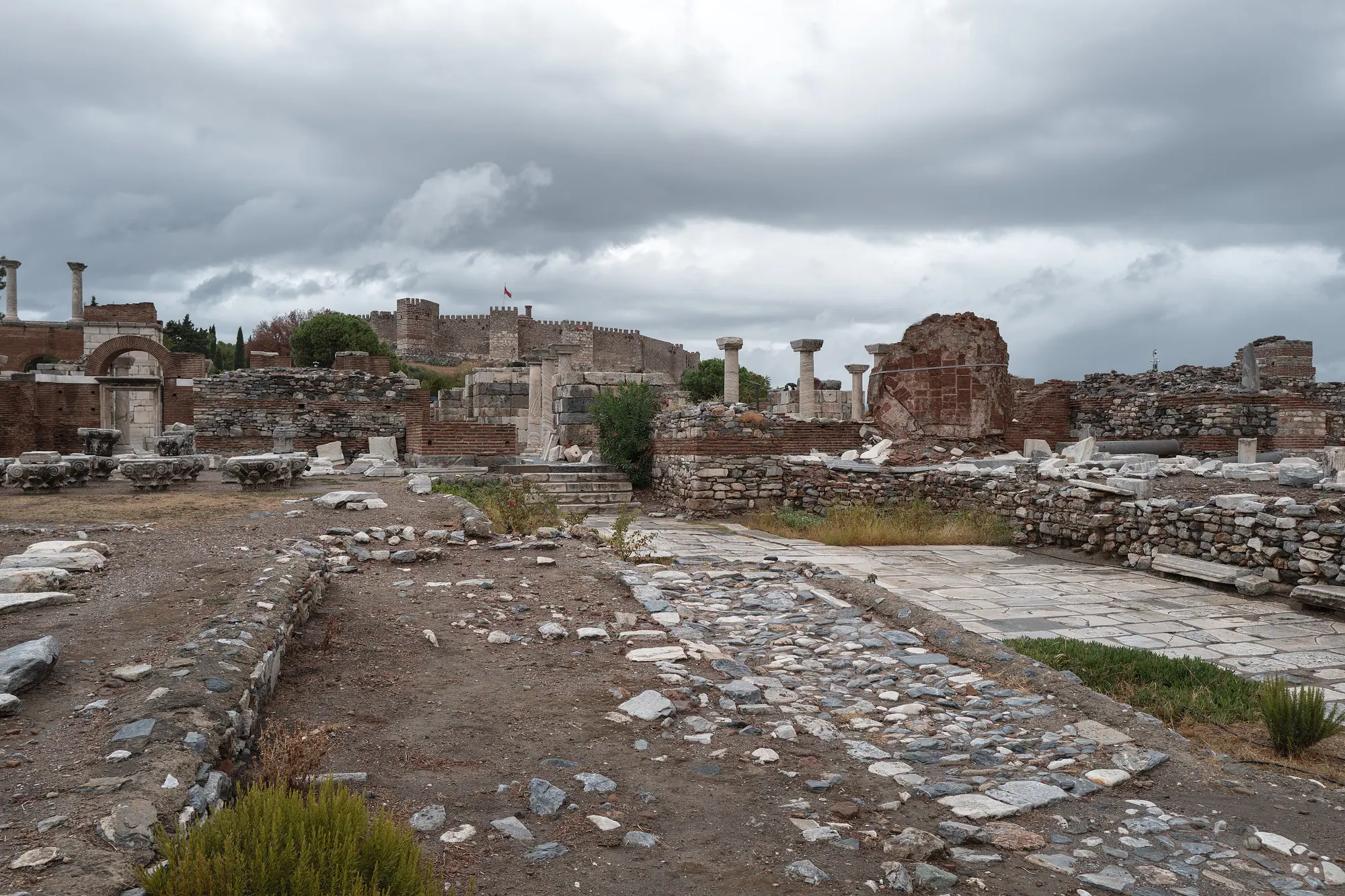
On Ayasuluk Hill at Selçuk lie the ruins of the church that was once the chief goal of pilgrims to Ephesus. Emperor Justinian I built it in the mid-6th century as a great domed basilica on a cross-shaped plan, modelled on the Church of the Holy Apostles in Constantinople1. At its heart, beneath the central dome, is the tomb that Christian tradition holds to be that of John the Apostle2. The hill, the church and the medieval settlement around them now form one of the four components of the Ephesus World Heritage property3.
Is St John the Apostle buried in Ephesus?
Christian tradition has placed his grave here since the late 2nd century. The earliest witnesses are Irenaeus, in Against Heresies, and Polycrates, bishop of Ephesus, in a letter quoted by Eusebius, while the New Testament itself never says that John lived or died at Ephesus8. Polycrates wrote that John "fell asleep at Ephesus"8.
The grave was venerated on Ayasuluk. Medieval pilgrims reported a healing dust, called manna, rising from it, and Augustine mentions reports that the earth over the tomb seemed to stir as though the saint were breathing9. For the early Byzantine centuries this tomb, not any site associated with Mary, was the main pilgrimage goal of Christian Ephesus: Egeria planned to visit in the 380s, the pilgrim Willibald came in 724–726, and Emperor Constantine VI in the 790s10.
Which John?
Tradition makes one person of John, son of Zebedee, the “disciple whom Jesus loved”, the author of the Fourth Gospel and John of Patmos, who wrote Revelation; many modern scholars see some or all of these as different people11. Calling the saint of this church John the Apostle follows the tradition; it does not settle the question.
Revelation opens with letters to seven churches in the Roman province of Asia, and Ephesus comes first12. The letter to the church of Ephesus praises its hard work, endurance and rejection of false apostles, then reproaches it for having left its "first love"13.
John, Mary and Ephesus
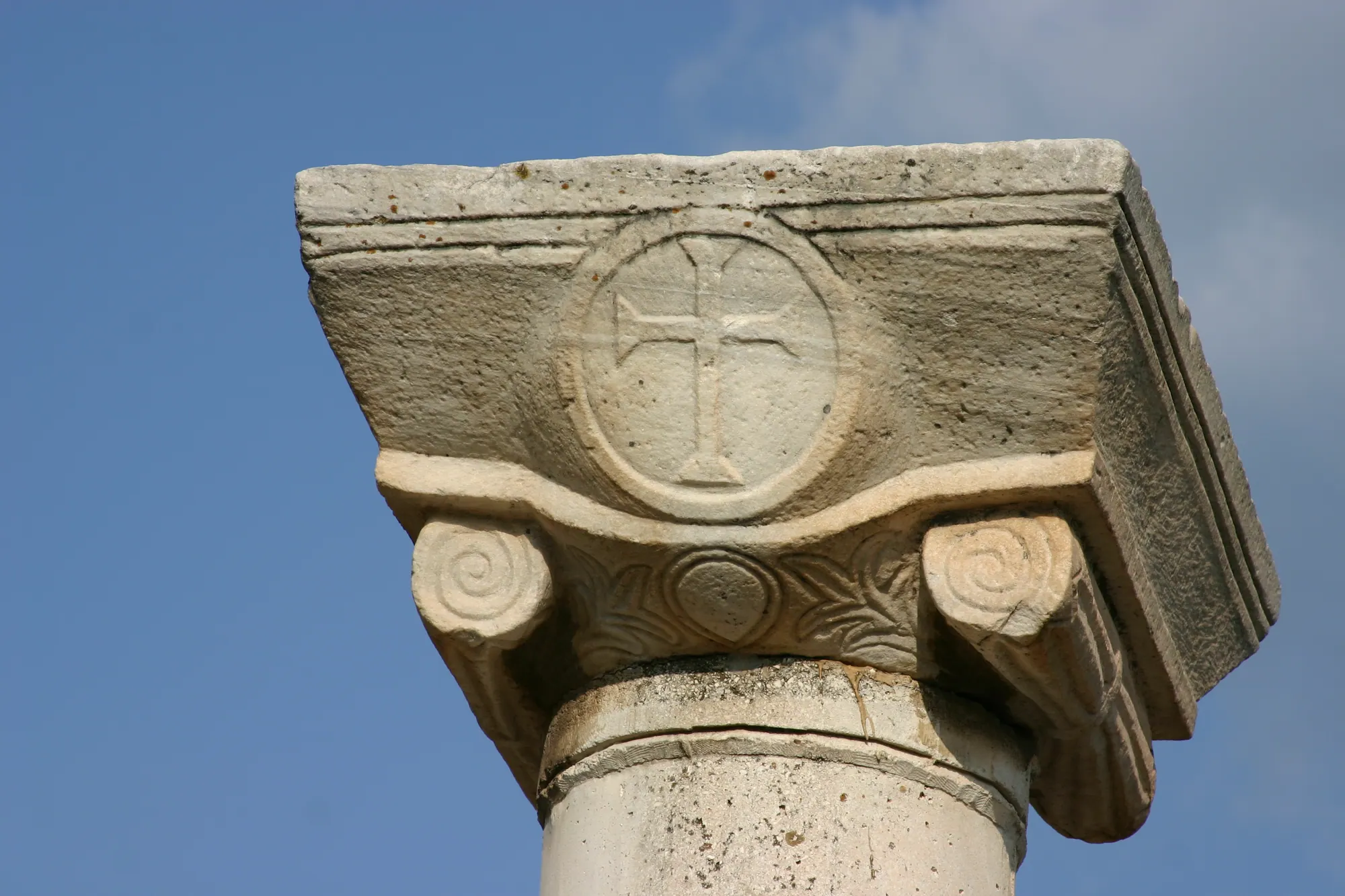
The link between John and Mary rests on one scene. As Jesus hangs on the cross in John 19:26–27, he gives his mother into the keeping of the beloved disciple, who takes her to live with him, and the tradition that Mary accompanied John grows from those verses14. The Gospel does not say where. Epiphanius of Salamis noticed in the 4th century that Scripture sends John to Asia without saying that Mary went too15. No early church writer puts her at Ephesus; the Ephesian tradition first appears centuries later in Syriac authors, and the belief that she died and was buried in Jerusalem is both older and far more common16. The shrine now known as the House of the Virgin Mary was identified only in 189117.
Justinian’s basilica
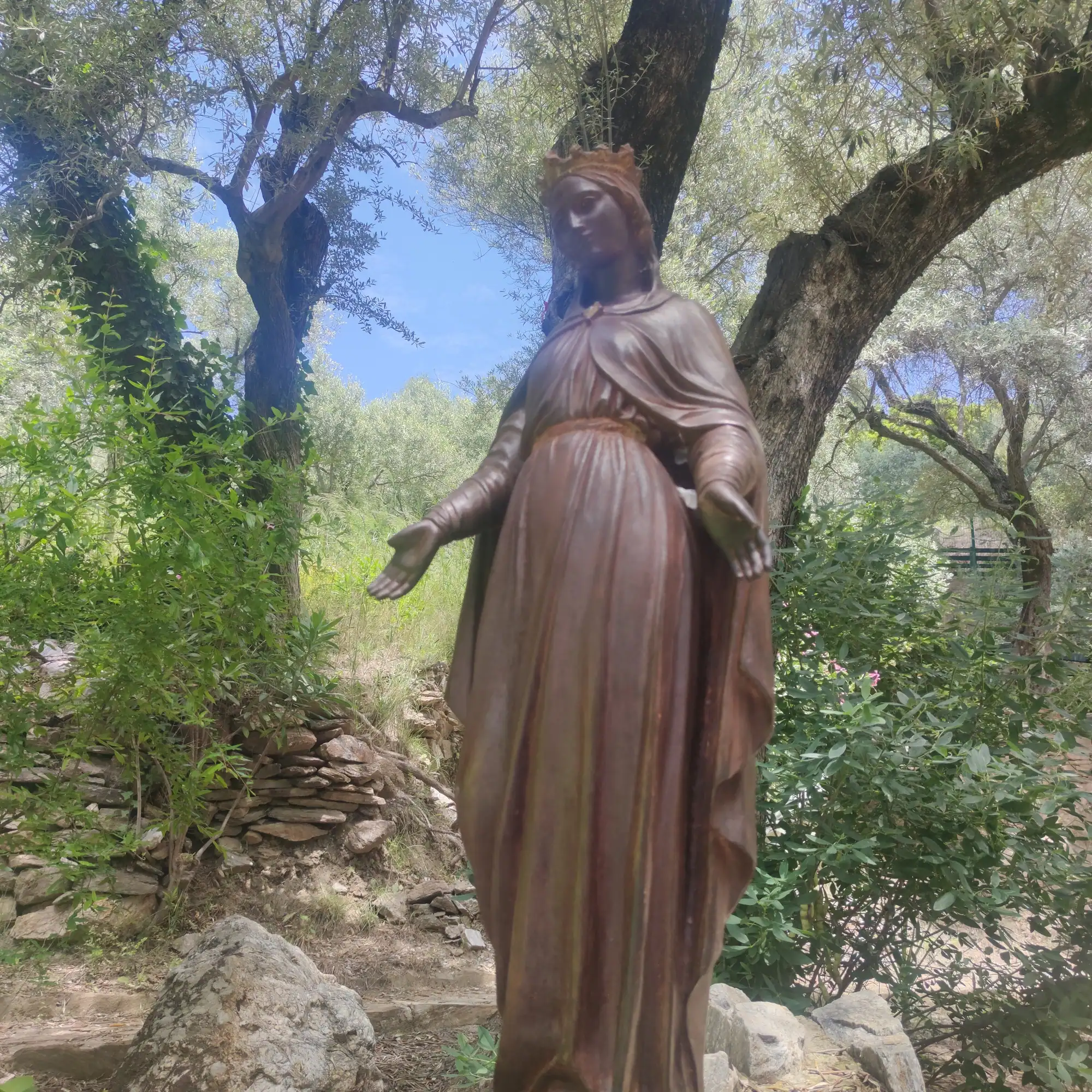
Justinian did not build on an empty site. He replaced a small, ruined older church over the apostle’s traditional grave, and the new building went up around the middle of the 6th century18. Procopius records the rebuilding in his account of Justinian’s buildings1. The Austrian archaeologist Peter Scherrer names Theodora as co-builder with her husband18, and capitals in the nave still carry the monograms of Justinian and the empress5.
The Turkish Ministry of Culture gives the church six domes over a three-aisled, cross-shaped plan, while some English-language sources say five4. The forecourt, or atrium, is given as about 47 by 34 m and rests on vaulted substructures, because the hillside falls away steeply19.

The tomb, the baptistery and the treasury
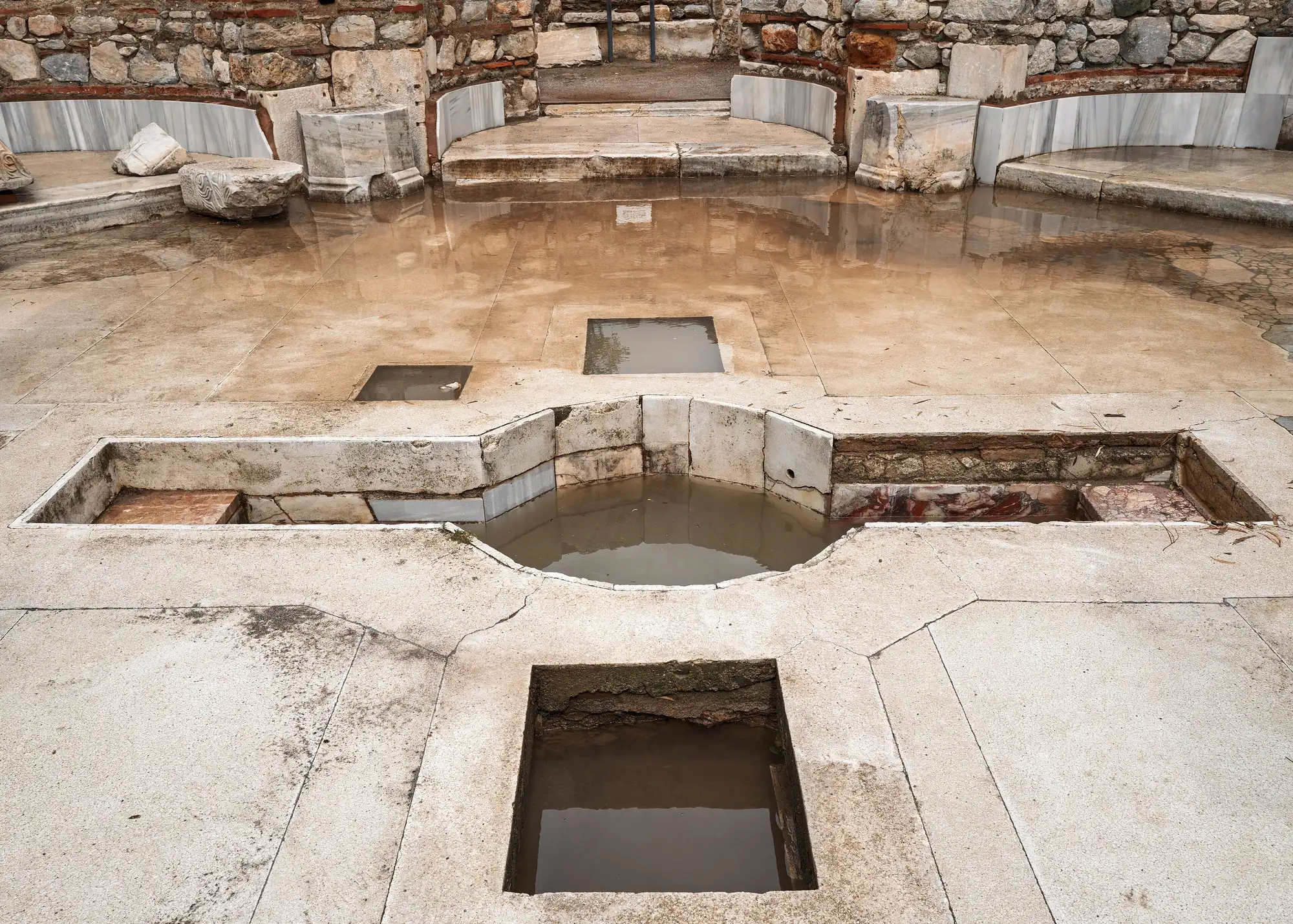
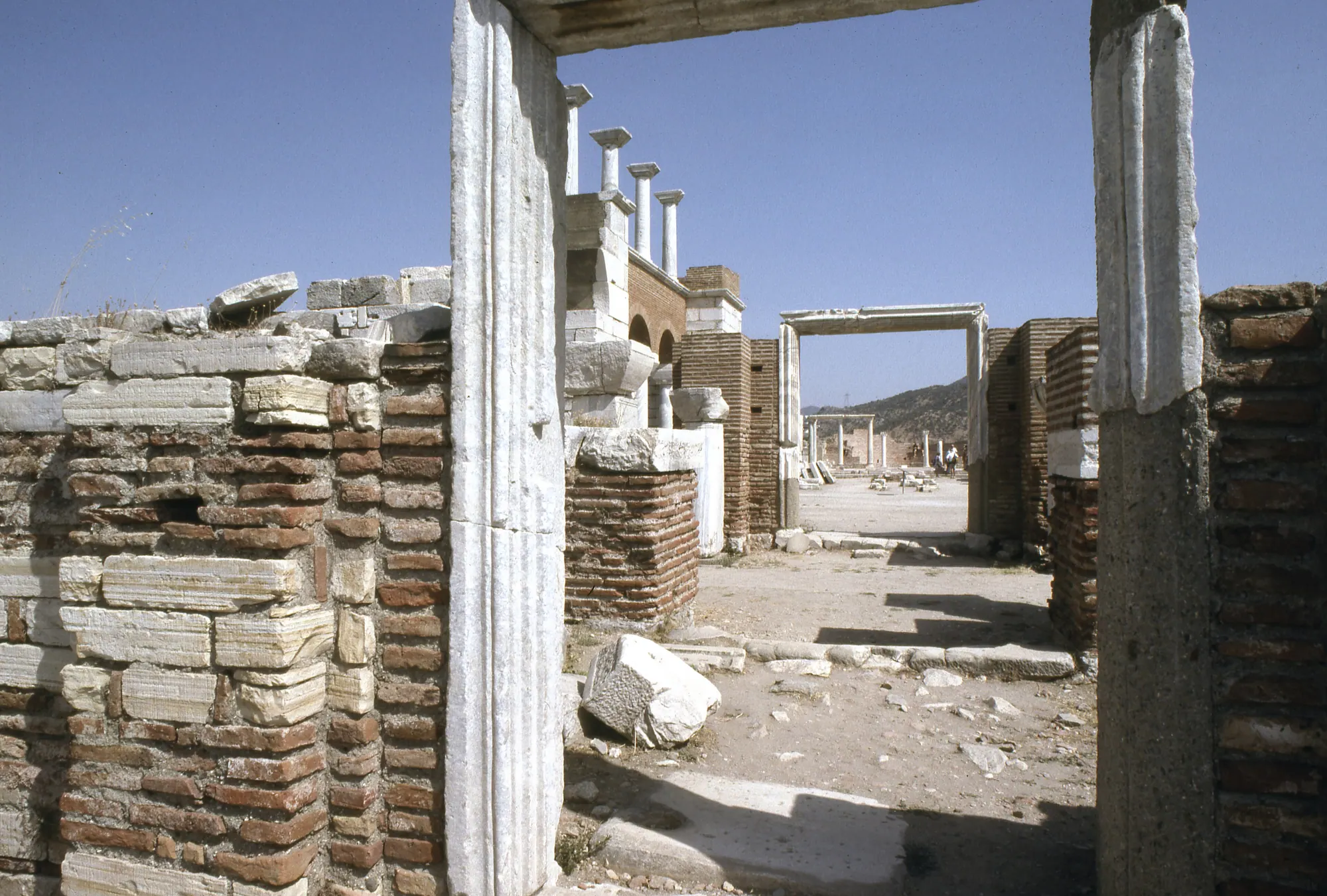
The tomb lies under the central dome at the crossing, in a crypt reached by steps2. An octagonal baptistery adjoins the north side of the church, and a treasury, the skeuophylakion, adjoins the north transept2. The Ministry lists the church, baptistery, treasury and a chapel as the parts of the complex2.
Stones from the Temple of Artemis
Some of the church’s stone came from a far older and more famous building. The Temple of Artemis lay abandoned by about 400, its marble was quarried, and a large share of it ended up in this church and, later, in the İsa Bey Mosque below the hill20. Relief fragments from the Archaic temple, the one Croesus helped to pay for21, have been recovered from the basilica22.
The Gate of Persecution
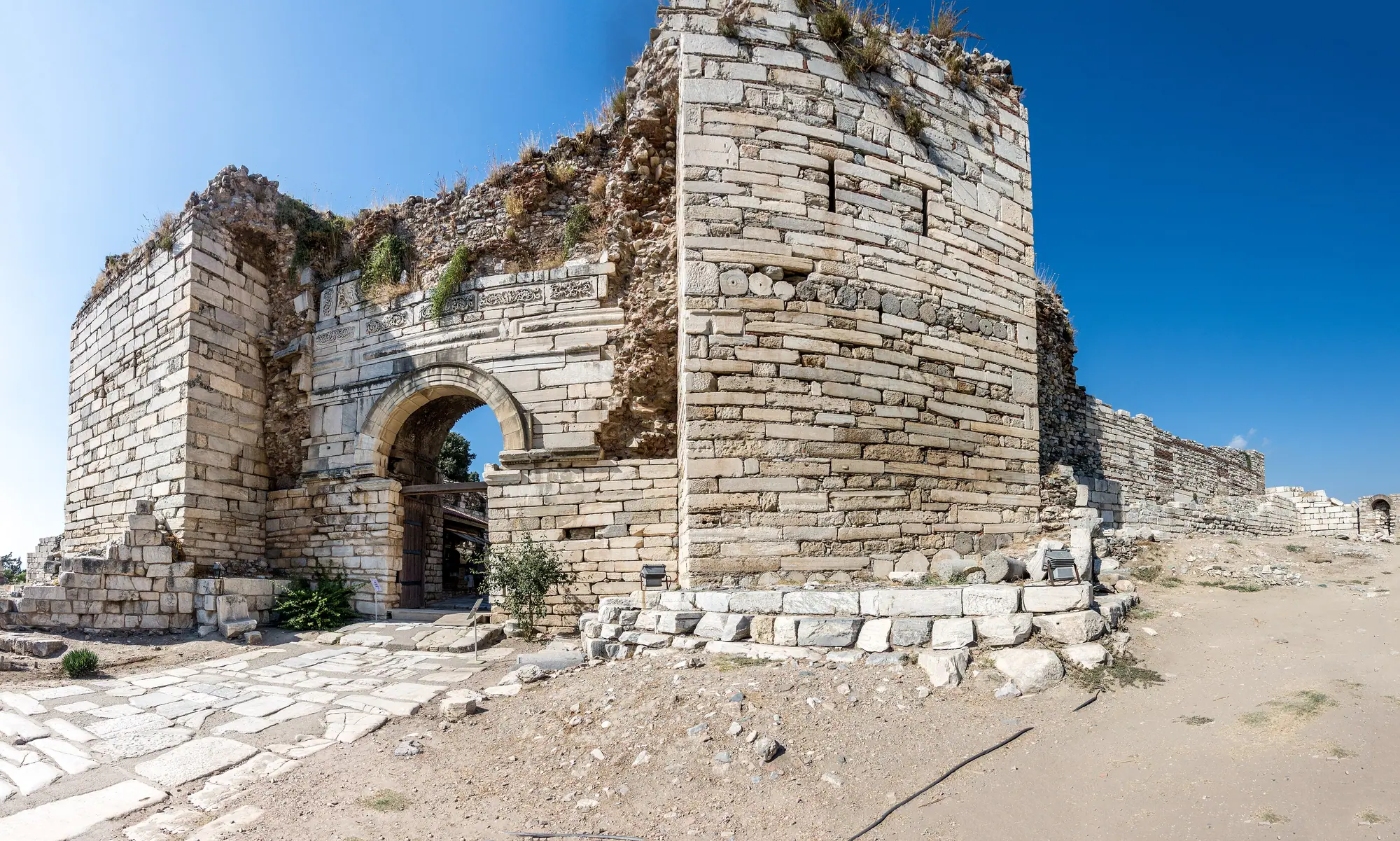
The fortified main gate of the St John precinct owes its grim name to a misreading. It carries reused Roman reliefs of the Trojan War, with Achilles, Patroclus and Hector, and 18th-century travellers took them for scenes of Christian martyrdom23. The name stuck.
How Ayasuluk took over from Ephesus
The church changed the map of the city. Arab fleets raided Ephesus from the mid-7th century, and a raid in 781 took some 7,000 people captive24. After those raids the precinct around the church was walled, and Byzantine Ephesus gradually recentred itself on the hill25, whose defences were renewed from around the 7th century18. In time the hill took the church’s dedication as its name: Ayasuluk is what Turkish speakers made of Hagios Theologos26.
The town on the hill lived through the turbulence of the Byzantine frontier. Ephesus belonged to the Thracesian theme from the 7th century and held a profitable annual fair in the 8th27. Paulicians under Chrysocheir attacked or took it in the 860s28. The Seljuk Turks captured it in 1090, and a Byzantine force under John Doukas recovered it in 1096/9729. In December 1147 the Second Crusade’s armies camped at Ephesus and fought the Seljuks close by30. After 1204 Ephesus belonged to the Empire of Nicaea from 1206 and was a centre of learning31.

Turkish Ayasuluk and the end of the church
When the town surrendered in October 1304 to Sasa Bey and his Aydınid allies, many of its Christians were driven out, killed or taken as slaves32. For a time the basilica itself served as a mosque, until the İsa Bey Mosque went up below the hill in 137533. Under the Aydınids the town became a capital and a trading port dealing with Venice and Genoa34.
Earthquake damage, and the devastation Timur’s army brought to the area in 1402, had left the church in ruins by the late Middle Ages35. Timur then handed the region back to the Aydınid princes36, and Murad II brought it under Ottoman rule for good, probably in 1425, though some sources give 142637.

The castle on Ayasuluk Hill
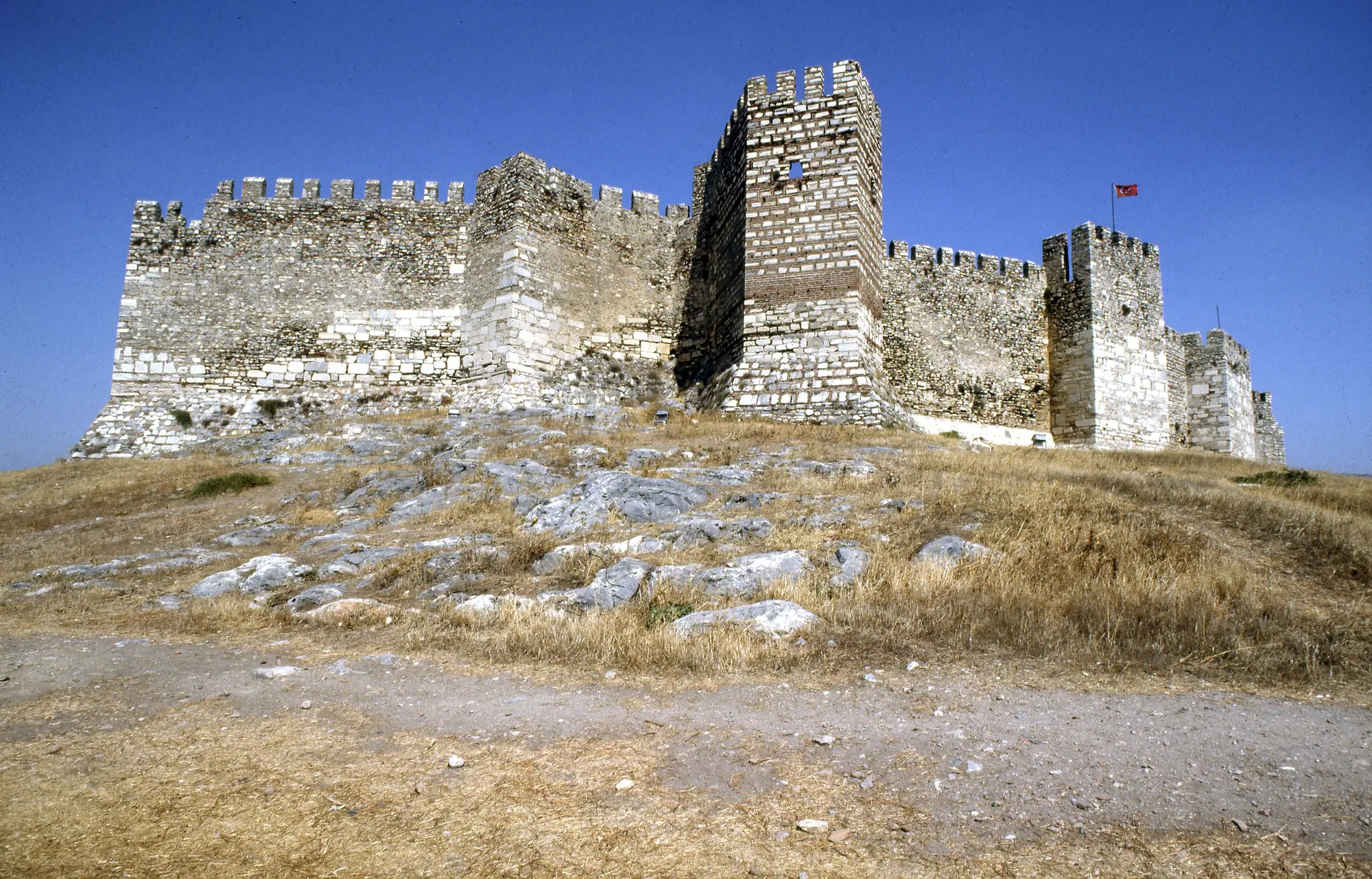
The castle on the summit was first built by the Byzantines and repaired by the Aydınids and early Ottomans. Its walls have 15 towers and two gates, east and west, and enclose the remains of a palace, a mosque, a bath and cisterns38. It is a separate circuit from the lower wall around the church precinct, and the two are easily confused38.
Excavation and restoration
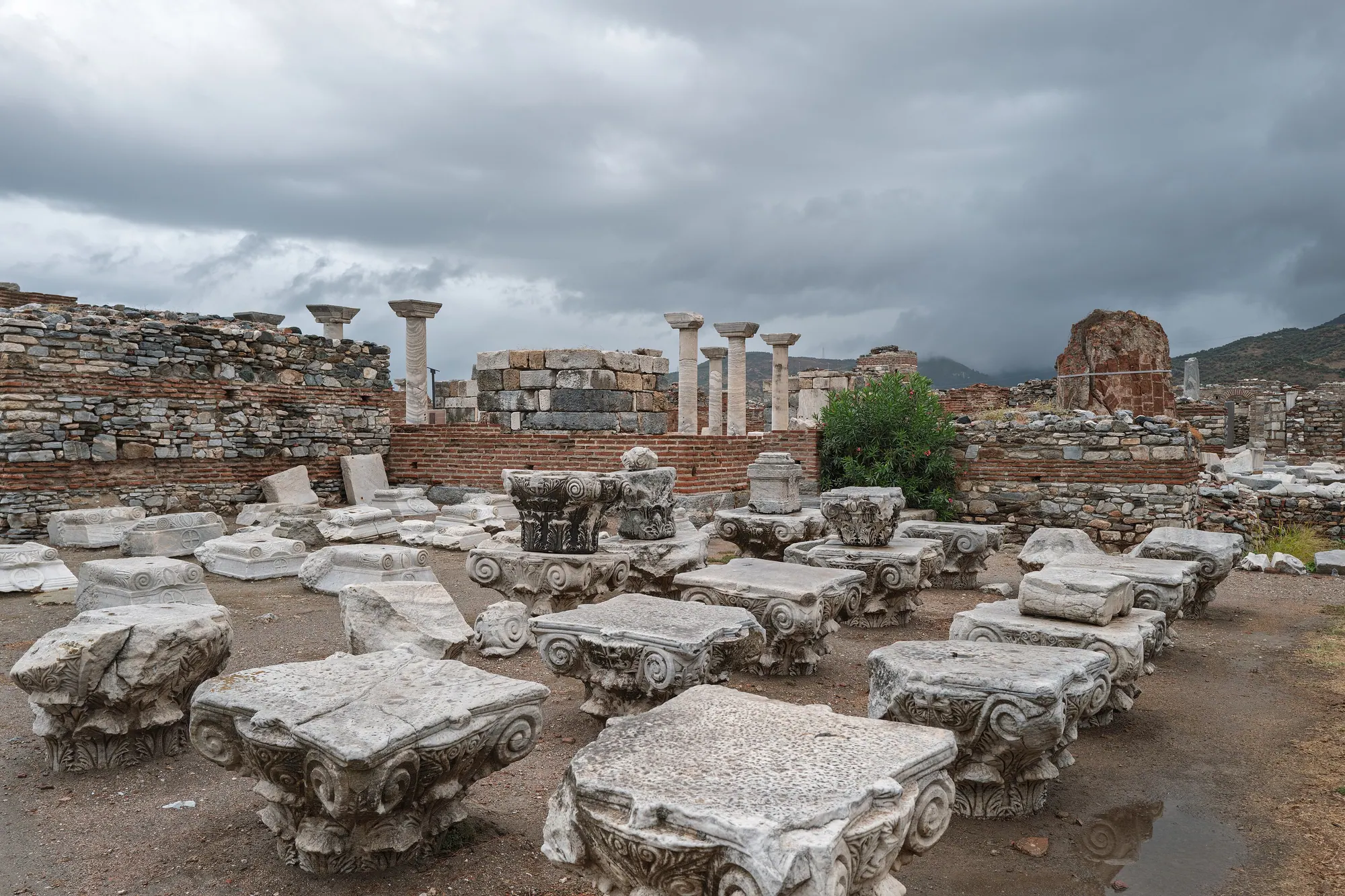
The Greek archaeologist Georgios Soteriou dug here in 1920–21, during the Greek occupation, and the Austrian Archaeological Institute excavated from 1926 to 1931, with the results published by Hans Hörmann in 1951; Turkish-led excavation and restoration followed6. The partial re-erection of columns and walls was paid for by American religious foundations connected with George B. Quatman and the American Society of Ephesus39. In the 2000s and 2010s Pamukkale University led work under Mustafa Büyükkolancı, and the 2024 season was run under the Ministry of Culture and Tourism with Hatay Mustafa Kemal University40.
Visiting the Basilica of St John
The Ministry lists the site as Ayasuluk–St Jean and tickets it separately from the ancient city, with the MüzeKart accepted7. It has already announced a price rise from 1 April 202741, and the basilica appears on the Ministry’s MuseumPass site map42. The church is one of several places around Ephesus grouped with Ayasuluk Hill in the World Heritage listing, the site of the Temple of Artemis among them3. Current prices and hours are kept on tickets and opening hours.
Sources
Each source is listed once. The numbers link back to the claims it supports; dates show when the source was checked.
- kar.kent.ac.uk › LAAJ_009_11-Karydis.pdf 1
- www.kulturportali.gov.tr › ayasuluk-tepesi-ve-st-jean-aniti-oren-yeri- 1, 2, 4, 7, 33, 38, 40
- turkisharchaeonews.net › basilica-saint-john-and-ayasuluk-fortress 1, 2, 5, 6, 9, 19, 33, 35, 38, 39
- de.wikipedia.org › Johanneskirche_(Ephesos) 2, 4, 5, 6, 19, 23, 25, 35, 39
- web.archive.org › multiple=1 3
- web.archive.org › 1018 3
- whc.unesco.org › 6387 3
- de.wikipedia.org › Ephesos 3, 28, 29
- en.wikipedia.org › Ephesus 3, 18, 24, 27, 29, 30, 31, 32, 34, 36, 37
- en.wikipedia.org › Basilica_of_St._John 4, 10
- dosim.ktb.gov.tr › muze-ve-oren-yeri-ucretleri.html 7, 41
- izmir.ktb.gov.tr › izmir-ili-muze-ve-oren-yerleri-giris-ucreti-tarifesi.html 7
- muze.gov.tr › muze-detay 7
- www.tursab.org.tr › 3ce94ed3-2265-4180-8a87-594371bcf0b5.pdf 7, 41
- web.archive.org › Saint-John-the-Apostle 8
- www.newadvent.org › 05490a.htm 8, 11, 25
- www.newadvent.org › 0103303.htm 8
- www.newadvent.org › 250105.htm 8
- en.wikipedia.org › John_the_Apostle 9, 11
- www.austriaca.at › 0xc1aa5572 0x0014a7d8.pdf 10, 15, 16
- bible-api.com › revelation+1:11 12
- en.wikipedia.org › Seven_churches_of_Asia 12, 13
- bible-api.com › revelation+2:1-7 13
- bible-api.com › john+19:25-27 14
- www.vatican.va › hf_ben-xvi_hom_20061129_ephesus.html 14
- de.wikipedia.org › Haus_der_Mutter_Maria 15, 16, 17
- en.wikipedia.org › Tomb_of_the_Virgin_Mary 16
- turkisharchaeonews.net › house-virgin-mary-ephesus 17
- en.wikipedia.org › House_of_the_Virgin_Mary 17
- web.archive.org › Ephesus 18, 26
- www.thebyzantinelegacy.com › ephesus 18, 24, 27, 28, 29, 30, 31, 32
- penelope.uchicago.edu › 5*.html 18
- austriaca.at › 0xc1aa5576_0x001c9934.pdf 18, 26
- en.wikipedia.org › Ayasuluk_Hill 18, 26, 36
- Kraft, Brückner, Kayan, Engelmann 2007, Geoarchaeology 22:121-149, doi:10.1002/gea.20151 20
- it.wikipedia.org › Efeso 20
- www.worldhistory.org › ephesos 20
- Ohnesorg 2007, Der Kroisos-Tempel, Forschungen in Ephesos XII/4, ch. I, ÖAW 21, 22
- de.wikipedia.org › Tempel_der_Artemis_in_Ephesos 21, 22
- Cartwright 2018 21
- www.romeartlover.it › Efeso5.html 23
- izmir.ktb.gov.tr › stjean-kilisesi-ve-ayasuluk-tepesi-kazisi--selcuk.html 25, 33
- www.blueguides.com › the-shifting-fortunes-of-ephesus-its-rise-and-fall-and-rise 26, 34, 37
- islamansiklopedisi.org.tr › ayasuluk 26, 36
- turkisharchaeonews.net › selçuk 26
- en.wikipedia.org › John_Doukas_(megas_doux) 29
- en.wikipedia.org › Aydinids 32, 34, 36, 37
- islamansiklopedisi.org.tr › aydinogullari 36
- en.wikipedia.org › Junayd_of_Aydın 37
- gonulluyuzbiz.gov.tr › 77658 40
- www.tursab.org.tr › fd72b227-0a27-46f5-b7e8-25fe4f9a17d5.pdf 41
- www.tursab.org.tr › 2027-yili-muze-ve-orenyeri-giris-ucretleri-hakkinda-duyuru 41
- www.ephesustoursbylocals.com › entrance-fees 42
- www.ephesustravelguide.com › museum-pass-the-aegean 42
- muze.gov.tr › urun-detay 42
- muze.gov.tr › urun-detay 42