
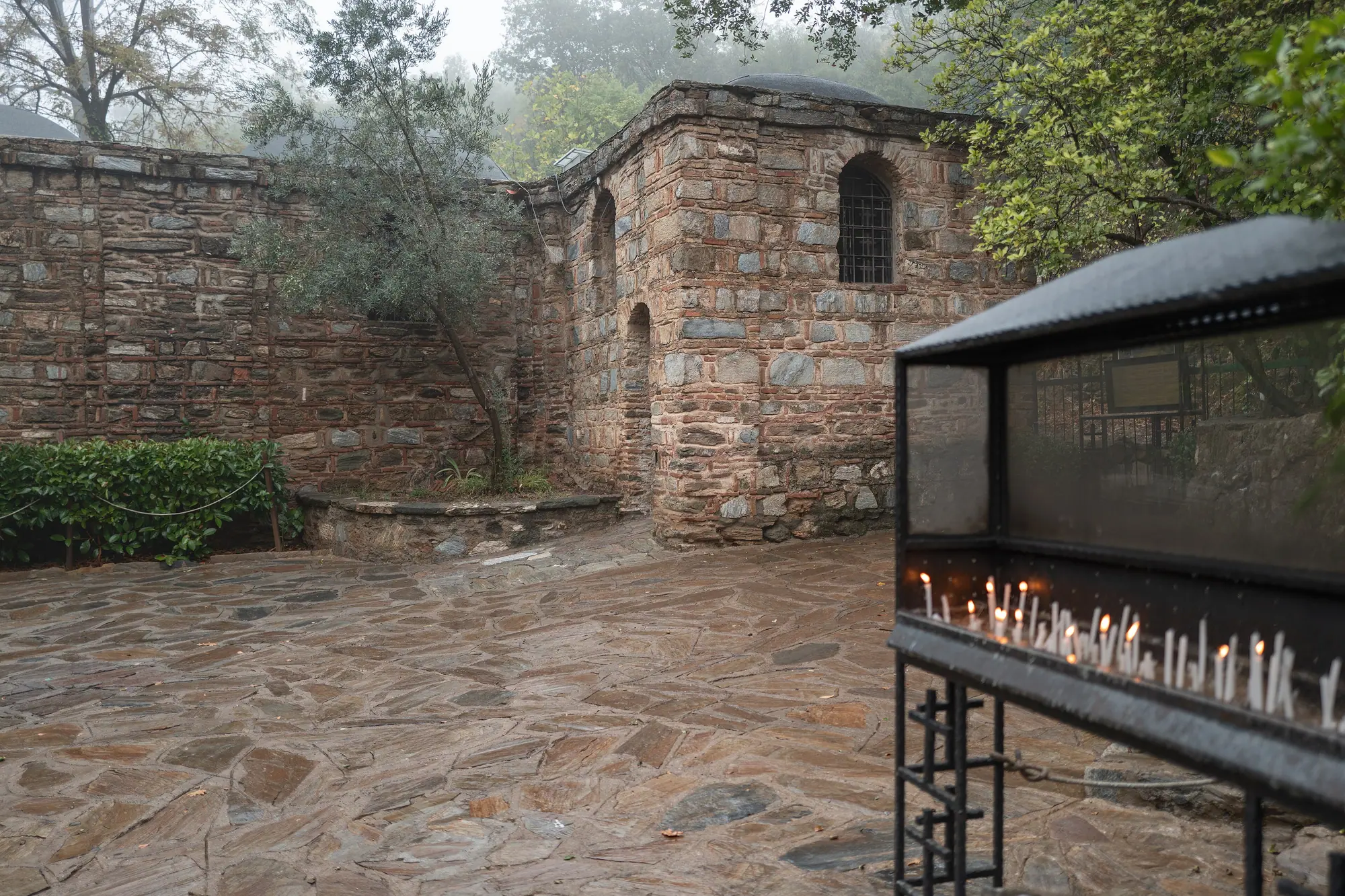
The House of the Virgin Mary, Meryem Ana Evi in Turkish, is a small chapel on the slopes of Bülbüldağ, at about 380 m and roughly 5 km south of ancient Ephesus1. Its identification as Mary’s home began with the visions of a German nun who died in 18242. The Catholic Church has permitted and encouraged pilgrimage there, but it has never ruled on whether Mary actually lived or died at the house3. Christians are not the only pilgrims: Muslim visitors, many of them Turkish women, come to pray as well4.
Did the Virgin Mary live in Ephesus?
No early source puts Mary at Ephesus, and the question has never been settled. The tradition grows out of a verse in John’s Gospel: Jesus, dying on the cross, gives his mother into the care of the disciple he loved, and that disciple takes her into his own home15. Tradition identifies the disciple with John16, and from the late 2nd century places John at Ephesus17. From there it was a short step to Mary living at Ephesus too.
The early church did not take that step. In the 4th century Epiphanius of Salamis pointed out that although Scripture sends John to Asia, it never says Mary travelled with him, and that no one knew for certain how her life ended18. An Ephesian tradition surfaces only in Syriac writers from the 8th or 9th century, among them Moses bar Kepha and Michael the Syrian. The older tradition, and the one held by far more Christians, puts her death and tomb in Jerusalem19.
A letter from the Council of Ephesus in 431 is sometimes quoted as proof. It mentions Ephesus together with John the Theologian and the Theotokos, but the verb is missing, so it cannot show that Mary lived or died there; the 1909 Catholic Encyclopedia read it as meaning only that Ephesus had a church of the Virgin20. For Byzantine pilgrims, the goal at Ephesus was John’s tomb, not any site of Mary21.
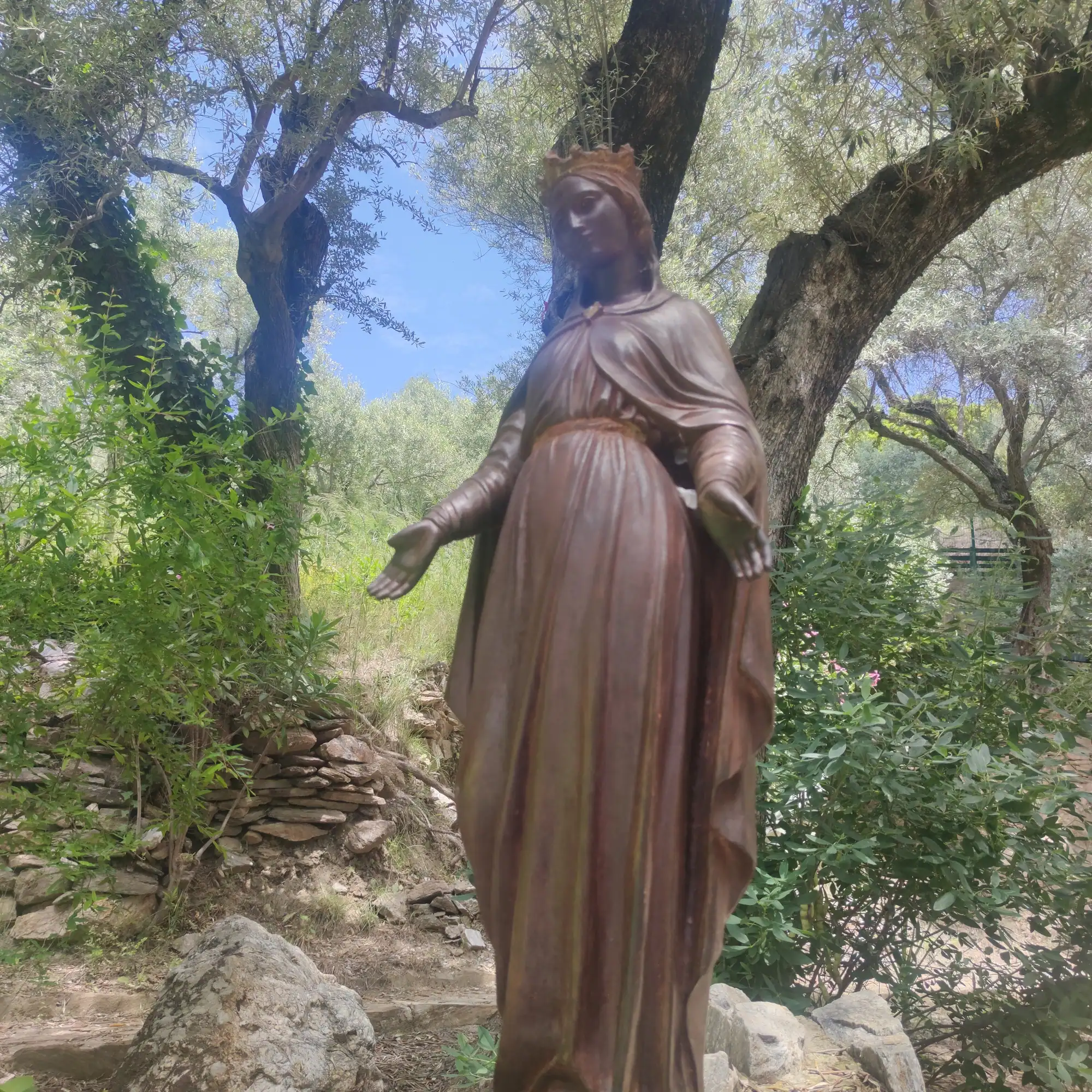
Anne Catherine Emmerich and Brentano’s book
The modern identification starts far from Turkey. Anne Catherine Emmerich (1774–1824) was an Augustinian nun at Dülmen in Westphalia, confined to her bed, whose visions the poet Clemens Brentano took down between about 1818 and 18242. Brentano’s Life of the Blessed Virgin Mary, based on those notes, appeared after his death, in Munich in 1852. It describes Mary’s house on a hill some three and a half hours from Ephesus22.
How much of the book is Emmerich’s own is doubtful. Studies of Brentano’s papers, among them Hümpfner’s of 1923, concluded that the poet worked in material of his own and from other sources, so that her words are hard to separate from his23. Emmerich herself is honoured by the Catholic Church: Pope John Paul II beatified her on 3 October 200424.
How the house was found
On 18 October 1881 a French priest, Julien Gouyet, followed Brentano’s description, found a ruin and believed it was Mary’s house. Church authorities did not take him seriously5.
Ten years later the search was repeated with more weight behind it. Urged by Sister Marie de Mandat-Grancey, Lazarist (Vincentian) priests from Smyrna, Henri Jung and Benjamin Vervault, with the approval of their superior Eugène Poulin, rediscovered the ruin on 29 July 1891. A commission sent by Poulin in August confirmed their find6. Sister Marie, a Daughter of Charity who ran the French naval hospital in Smyrna, bought the site with family money in November 1892 and cared for it until her death in 1915. The shrine calls her its foundress25.
The priests were not the first to treat the ruin as holy. Orthodox Greeks from the village of Çirkince, today’s Şirince, already venerated it as Panaya Kapulu and made a pilgrimage there every 15 August, according to testimony recorded in 1892. Scholars note that this local custom is documented only from the 19th century26.
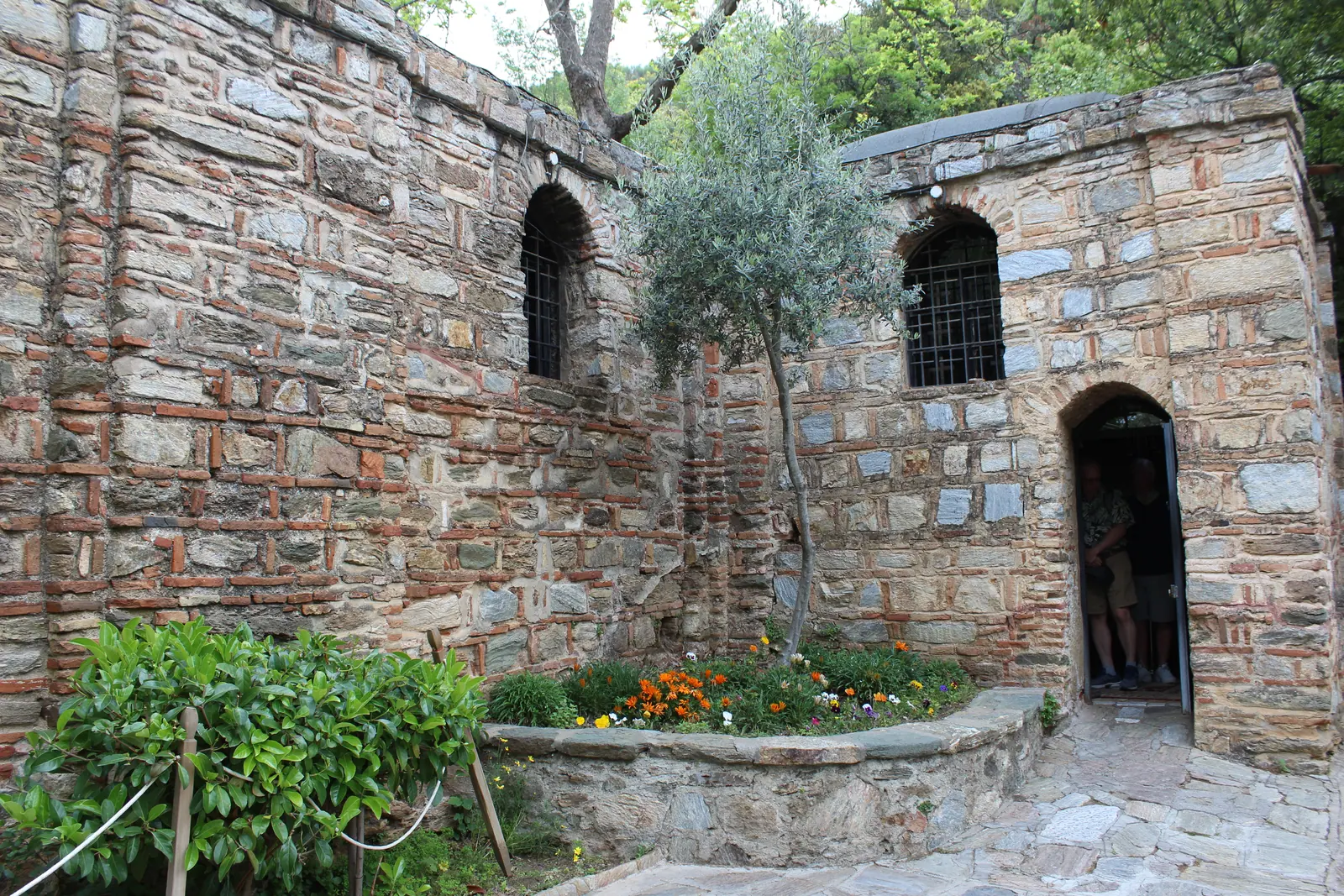
The archaeology of the house
The chapel is not an ancient house in its present form, and its date is argued over. The Italian archaeologist Adriano Prandi, who excavated in 1965–67, dated the chapel to a domed late-Byzantine building of the 13th century, set over an earlier structure that he placed probably in the 2nd or 3rd century AD. An earlier investigator, in 1905, had proposed the 5th to 7th centuries, so the dating is not settled7.
In 2003 the Austrian Ephesus team dug two trial trenches in the garden, about 80 m west of the chapel, for the Turkish heritage authority, after rumours of a buried glass coffin. They found no coffin. The pottery showed instead that the atrium of an ancient villa already stood there in the 1st century BC27. Tile graves west of the chapel held Byzantine coins of the 7th and 8th centuries28.
Much of what visitors see is restoration. A provisional rebuilding took place between 1898 and 1902, and a full restoration followed around 1950–51 under Archbishop Joseph Descuffi of Smyrna, after which the chapel was reconsecrated. A red line on the walls separates original masonry from restored work8.

War, ownership and the road
The 20th century interrupted the pilgrimages. The site was confiscated in 1917, and pilgrims stopped coming during and after the Greco-Turkish war. Turkey recognised private ownership in 1947, pilgrimages resumed from 1949, and the state built a paved access road in the early 1950s29.
Since 1955 the property has been linked with the American Society of Ephesus, founded by the Cincinnati businessman George B. Quatman. Locally the shrine is administered by an association, the Hz. Meryem Ana Evi Derneği, and a Capuchin community serves it30.

The Catholic Church’s position
The Church has encouraged pilgrimage without ruling on the history. Pope Leo XIII blessed the first pilgrimage in 1896. In a letter to Archbishop Descuffi in 1951, Pius XII declared the house a place of pilgrimage for Catholics, and in 1961 John XXIII granted pilgrims a permanent plenary indulgence31. None of these acts decided whether Mary lived or died there, and the Church has never made such a ruling3. What Leo XIII blessed in 1896 was a pilgrimage; he did not declare the house authentic31.
Three popes have come in person:
- 26 July 1967Paul VI visits Ephesus and the House of Mary9
- 30 November 1979John Paul II celebrates Mass at the house during his visit to Turkey10
- 29 November 2006Benedict XVI celebrates Mass there, prays for peace and speaks of Mary as loved by Muslims11
Leo XIV’s first foreign journey, to Turkey in November 2025, did not include Ephesus32.
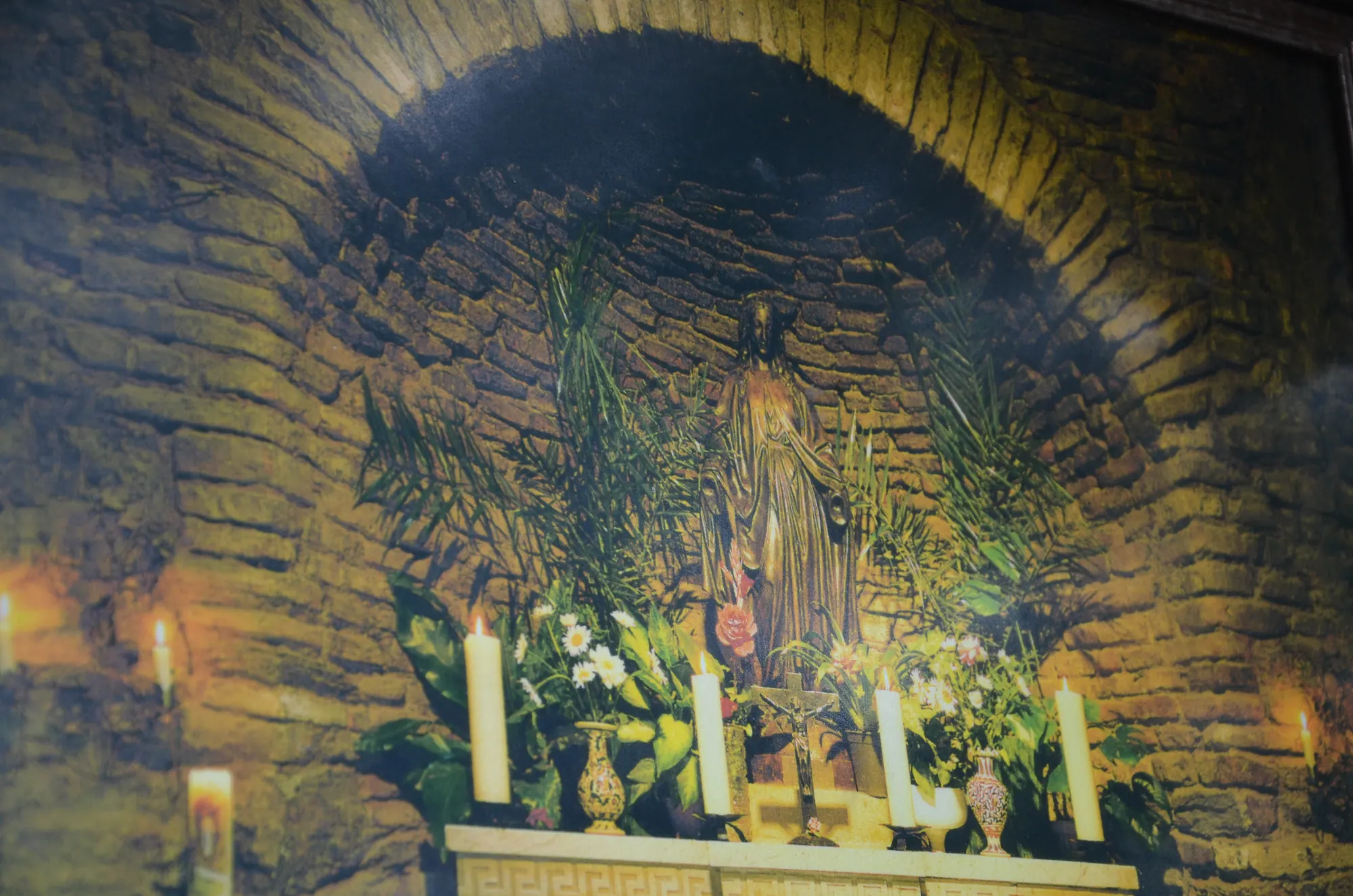
Why do Muslims visit Meryem Ana Evi?
Muslims revere Maryam as the mother of the prophet Isa, Jesus, and for many Turkish Muslims, especially women, the house is a place to pray4. Verses of the Qur’an about Mary have been displayed in a side room since the 1980s4. Benedict XVI acknowledged this shared devotion when he said Mass there in 200611.
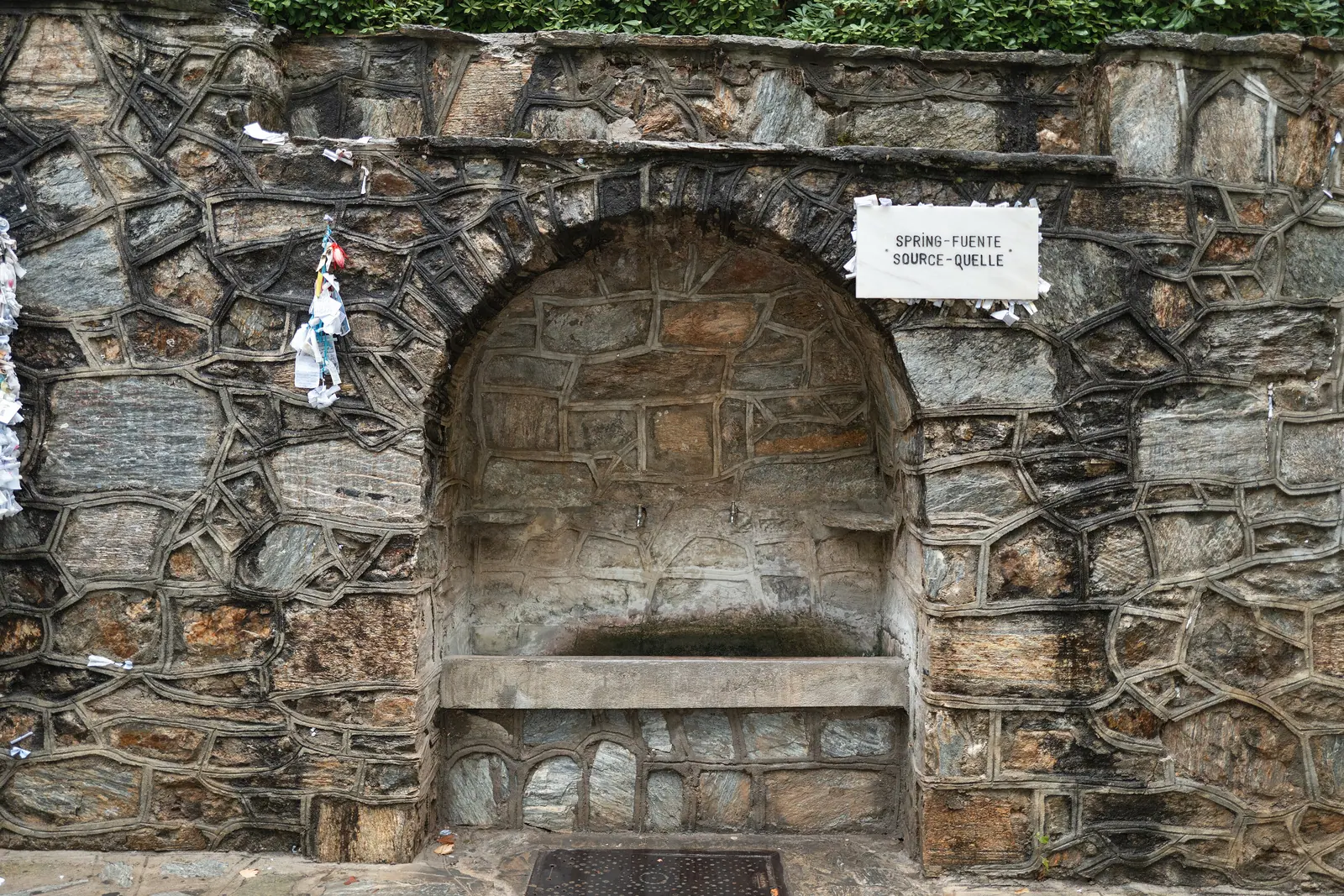
Below the house is a spring. Visitors of both faiths drink its water or take some away, and many believe it heals33. Nearby stands the wishing wall, where people tie ribbons, strips of cloth or folded paper carrying their prayers. It is described as a Turkish folk custom in origin, now followed by visitors of every faith34.
15 August at the House of Mary
Every 15 August a solemn Mass for the Assumption, the Dormition in Orthodox tradition, is held at the shrine, continuing the older local pilgrimage on the same date12. In recent years the Archbishop of İzmir has led it, with a vigil the evening before, while Orthodox Christians traditionally gather for the feast down in Şirince, the village whose people once made the pilgrimage3526.
The house within the World Heritage Site
The house is the smallest part of the Ephesus World Heritage property, 0.55 ha, listed by UNESCO beside Çukuriçi Höyük, the ancient city, and Ayasuluk hill with the Artemision13. Yet when UNESCO sets out the site’s religious significance, it names the Church of Mary in the ancient city and the Basilica of St John, and leaves the house out36.
The two stand at opposite ends of sacred Ephesus. The Basilica of St John on Ayasuluk was built over a tomb that pilgrims were already visiting in the 4th century21; the house on Bülbüldağ was identified in the 19th6.
Visiting: hours, entry and getting there
Public transport does not run up the mountain to the house37. By road the house lies some 5 km above the Upper Gate of the ancient city; from the Lower Gate the distance is 11 km, and from Selçuk about 9 km37; the routes from İzmir, Selçuk and Kuşadası are the same as for getting to Ephesus itself.
Opening hours published by the shrine: 08:00–18:0014 (checked on ). The house is not a Ministry of Culture museum site, and entry appears to be charged separately rather than covered by the Ministry’s Ephesus ticket38.
How many people come is uncertain. Figures of about 300,000 a year are given for some years, and other published estimates reach nearly a million39.

Sources
Each source is listed once. The numbers link back to the claims it supports; dates show when the source was checked.
- www.austriaca.at › 0xc1aa5572 0x0014a7d8.pdf 1, 2, 3, 4, 5, 7, 8, 12, 18, 19, 20, 21, 25, 26, 27, 28, 29, 31
- de.wikipedia.org › Haus_der_Mutter_Maria 1, 4, 5, 6, 7, 8, 18, 19, 23, 25, 26, 27, 28, 29, 30, 31, 33
- en.wikipedia.org › Anne_Catherine_Emmerich 2, 22, 23, 24
- en.wikipedia.org › House_of_the_Virgin_Mary 3, 5, 6, 8, 9, 11, 12, 22, 24, 30, 31, 34, 35, 37
- fr.wikipedia.org › Maison_de_la_Vierge_Marie 3, 7, 39
- www.hzmeryemanaevi.com › en 4, 12, 30, 38
- turkisharchaeonews.net › house-virgin-mary-ephesus 6, 33, 34, 38, 39
- www.vatican.va › hf_p-vi_spe_19670726_fedeli-efeso.html 9
- www.vatican.va › pontificato_gp2_en.html 10
- www.vatican.va › hf_ben-xvi_hom_20061129_ephesus.html 10, 11, 15
- www.vatican.va › hf_jp-ii_hom_19791130_turkey-efeso.html 10
- www.hzmeryemanaevi.com › papa-ii-yuhanna-pavlus 10
- web.archive.org › multiple=1 13
- web.archive.org › 1018 13
- whc.unesco.org › 6387 13, 36
- de.wikipedia.org › Ephesos 13
- en.wikipedia.org › Ephesus 13
- www.ephesustoursbylocals.com › entrance-fees 14
- www.hzmeryemanaevi.com › hours 14, 38
- bible-api.com › john+19:25-27 15
- www.newadvent.org › 05490a.htm 16, 17, 20
- en.wikipedia.org › John_the_Apostle 16
- web.archive.org › Saint-John-the-Apostle 17
- www.newadvent.org › 0103303.htm 17
- www.newadvent.org › 250105.htm 17
- en.wikipedia.org › Tomb_of_the_Virgin_Mary 19
- en.wikipedia.org › Basilica_of_St._John 21
- www.deutsche-biographie.de › gnd118530186.html 22, 23
- www.newadvent.org › 05406b.htm 22
- www.vatican.va › hf_jp-ii_hom_20041003_beatifications.html 24
- en.wikipedia.org › Marie_de_Mandat-Grancey 25
- www.vaticannews.va › schedule-for-pope-leo-s-first-international-journey.html 32
- en.wikipedia.org › 2025_visit_by_Pope_Leo_XIV_to_Turkey_and_Lebanon 32
- tr.wikipedia.org › Meryem_Ana_Evi 33
- www.aa.com.tr › 2661431 35
- www.katolik-kilisesi.org › 15-agustos-meryem-ananin-goge-alinis-bayrami-icin-efes-merye 35
- www.worldheritagesite.org › ephesus 36
- www.hzmeryemanaevi.com › location 37
- OSRM car/foot profiles over OpenStreetMap, our query 2026-09-14 37
- www.hzmeryemanaevi.com › worship 38
- dosim.ktb.gov.tr › muze-ve-oren-yeri-ucretleri.html 38