The excavated Roman city is only one of the places Ephesus has been. The settlement shifted more than once, and in the Middle Ages its centre moved up to Ayasuluk Hill, where the town of Selçuk now stands1. UNESCO recognised this spread in 2015, inscribing Ephesus as a serial property in four parts: the prehistoric mound of Çukuriçi Höyük, the ancient city, Ayasuluk Hill together with the Artemision and the medieval town, and the House of the Virgin Mary2.
Below are those places, a few further afield, and the road distances between them and the ancient city.
A city that kept moving
Across the history of Ephesus, the city moved because its harbours silted up. The Küçük Menderes delta has been advancing into the sea since the fifth millennium BC, and each new harbour had to be dug further west than the last6. Strabo records the first move, from the hillside down to the plain around the Temple of Artemis7; Lysimachus made the second, to the walled Hellenistic city that is excavated today8.
The last move ran the other way, uphill and inland. After Arab raids in the 7th and 8th centuries the precinct of St John’s church was fortified, and the centre of Byzantine Ephesus shifted to Ayasuluk Hill1. The lower city did not empty overnight: excavation south of the Church of Mary finds households there into the 12th century, then fields among the ruins, and a final flicker of use in the 14th9. The old city was deserted by the 15th century10, while the town on the hill carried on.

Where each place lies
Distances are by road unless noted.
| Place | What it is | Distance |
|---|---|---|
| Selçuk railway station | the rail stop for Ephesus | a 3.5 km walk to the Lower Gate11 |
| House of the Virgin Mary | shrine on Bülbüldağ | 5 km from the Upper Gate, 11 km from the Lower Gate12 |
| Şirince | hill village | 10 km from the Lower Gate13 |
| Belevi Mausoleum | Hellenistic tomb | 14 km north-east of Ephesus14 |
| Kuşadası cruise port | port town | 19 km to the Lower Gate15 |
| Priene | ancient city | 60 km from the Lower Gate13 |
| İzmir airport | nearest airport | 62 km to the Lower Gate16 |
The Temple of Artemis
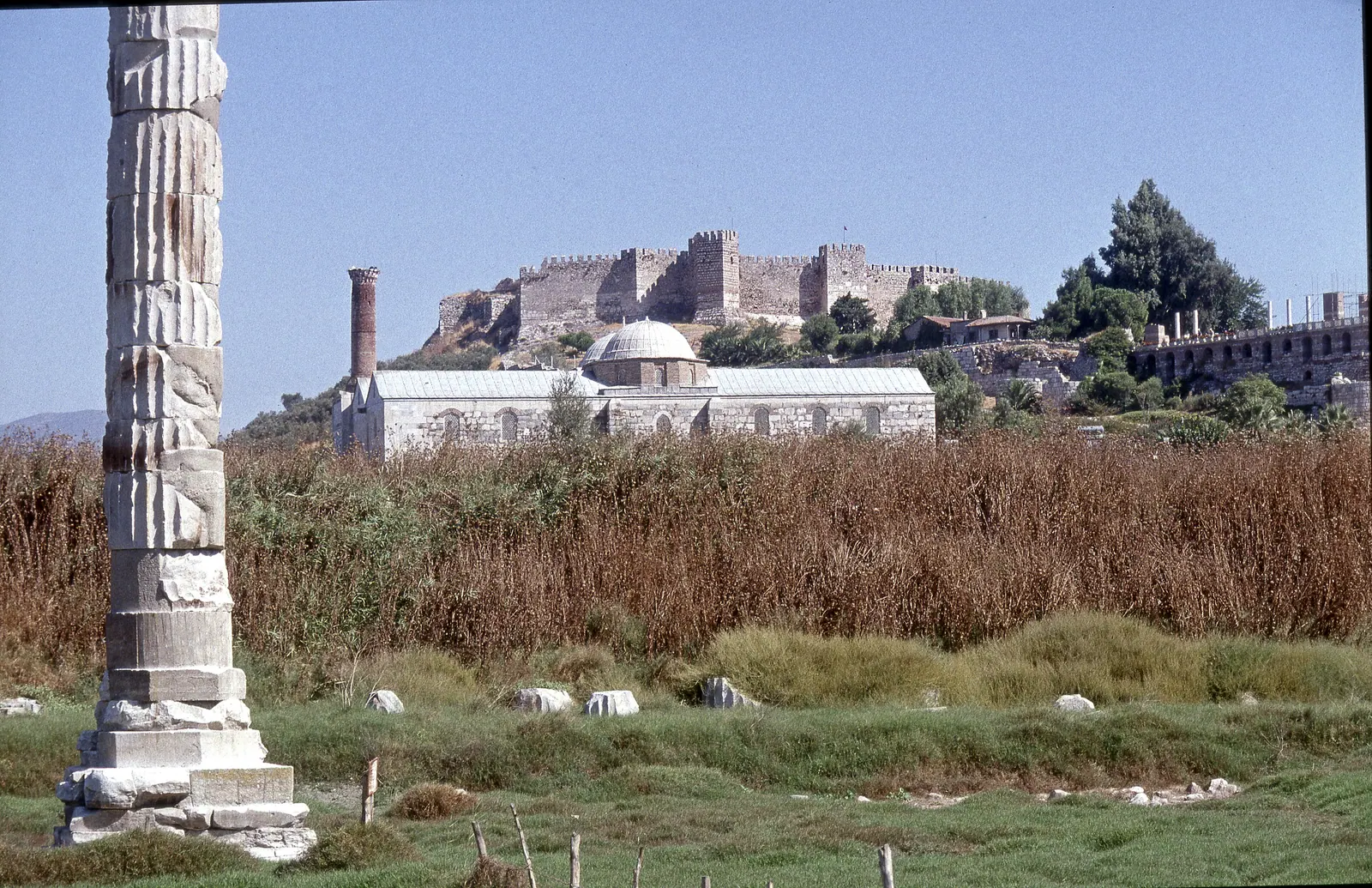
The Temple of Artemis, one of the Seven Wonders17, lay outside the Roman city and shares a World Heritage component with Ayasuluk Hill2. Its stone outlived it: once the sanctuary was abandoned, its marble was quarried for the buildings of medieval Ayasuluk18. One column, pieced together from fragments, now marks the spot19, and there is no ticket to buy20. John Turtle Wood located the temple on the last day of 186921.
Ayasuluk Hill and the Basilica of St John
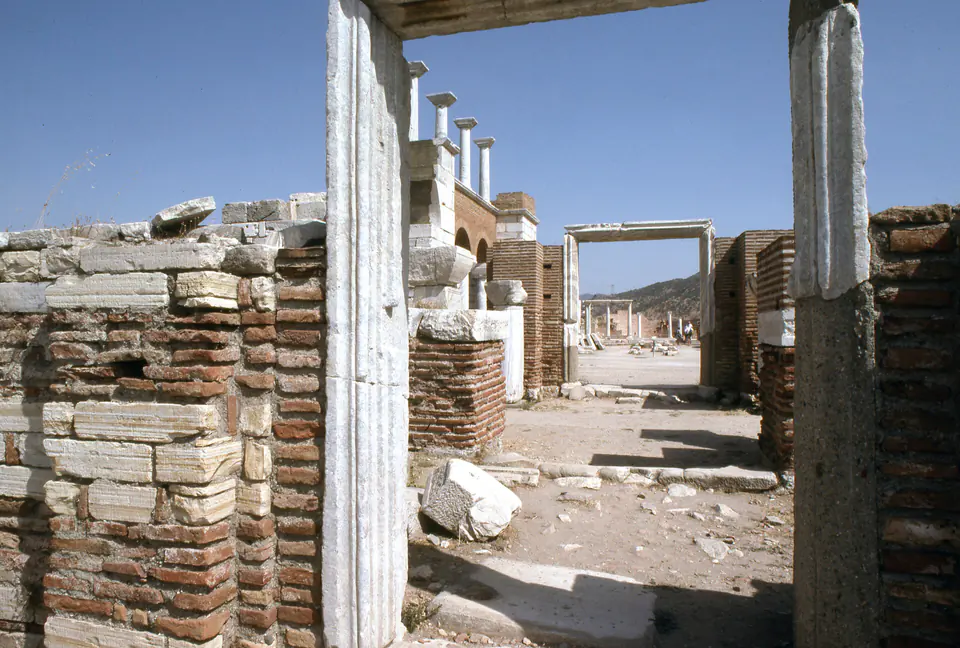
The hill at Selçuk is named after its church. Ayasuluk is the Turkish form of Hagios Theologos, “the holy theologian”, that is, St John, which Italian traders wrote as Altoluogo3. Christian tradition from the late 2nd century placed the apostle’s grave at Ephesus22, and over it stand the ruins of the Basilica of St John, the church that Justinian rebuilt on a domed, cross-shaped plan23.
Two more monuments frame the church. Its precinct is entered through a gateway that 18th-century travellers misnamed the Gate of Persecution24, and the summit above is crowned by a castle begun by the Byzantines and repaired under Turkish rule25.

İsa Bey Mosque
Turkish rule at Ayasuluk began with the town’s surrender in 130426, and the Aydınid beylik made it both a capital and a port trading with Venice and Genoa27. An inscription over the west door dates the mosque to March 1375 and names its patron, the Aydınid ruler İsa Bey, and its architect, Ali ibn Mushaimish of Damascus28. Until then the old basilica had served for a time as a mosque29.
The good years did not last. The Ottomans under Bayezid I took the Aydın lands in 139030; Timur restored the Aydınid princes after his victory at Ankara in 1402, and his invasion damaged Ayasuluk31. Murad II made the region Ottoman for good, most likely in 1425, though 1426 is also given32. Like the temple site, the mosque is not a ticketed monument20.
Travellers kept coming. Cyriacus of Ancona visited in the 15th century, and the Ottoman writer Evliya Çelebi described Ayasuluk in the mid-17th33.

The Ephesus Museum in Selçuk
The museum in Selçuk holds the finds of the modern excavations, including the Roman statues of Artemis34, the Colossal and the Beautiful Artemis among them35. The Ministry lists sections on fountain finds, the Terrace Houses, coins, the Artemision, Artemis and the imperial cult, Çukuriçi Höyük, St John, the Ayasuluk fortress and the Belevi Mausoleum36. Among the highlights it names are the Resting Warrior from the Pollio fountain group, a marble Marcus Aurelius and a head of Eros copied from Lysippos37. The frieze of the Temple of Hadrian is here in the original, while the building on site carries casts38, and so is the Polyphemus group from the State Agora39.
Not everything stayed. The virtue statues from the façade of the Library of Celsus are in the Ephesos Museum in Vienna, a separate institution from the one in Selçuk, and copies stand in their place40.

House of the Virgin Mary
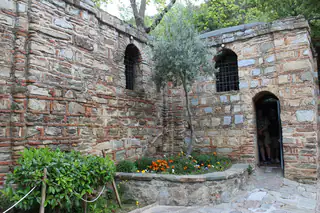
High on Bülbüldağ, the chapel of Meryem Ana Evi sits at about 380 m41. The belief that this was Mary’s last home grew out of what Anne Catherine Emmerich, an Augustinian nun in Westphalia, described in her visions to Clemens Brentano42, and priests from Smyrna identified the ruin in 189143. The tradition that she died in Jerusalem is older and more widely held44, and the Catholic Church has not pronounced on the house, though it encourages pilgrimage there45. Muslim women and men also come to pray, honouring Maryam46. No bus or train goes up to the shrine12. With the tomb of St John and the Seven Sleepers, the House of the Virgin Mary belongs to the wider story of Sacred Ephesus.

The Cave of the Seven Sleepers
On the slope of Panayırdağ, near the ancient city, is the cave associated with the legend of the Seven Sleepers47. In the Christian legend, young Christians fleeing the persecution under Decius took refuge in the cave, were sealed inside, and woke in the reign of Theodosius II48. Its oldest surviving form is a verse homily in Syriac by Jacob of Serugh49. The Qur’an has its own account in Sura 18, al-Kahf50, where only God knows how many slept: people guessed three, five or seven, each time counting a dog51.
When the Austrian Archaeological Institute dug the site in the late 1920s it found a late-antique cemetery with a cave church52: several hundred graves from the 5th and 6th centuries, inscriptions calling on the Seven Sleepers, and a great many terracotta lamps53. Ephesus is not the only claimant. According to Turkey’s Ministry of Culture, most Muslims place the Qur’anic cave at Tarsus or Afşin, whereas Christian tradition settled on Ephesus, and there are further claimants at al-Raqim near Amman, at Damascus and in Nakhchivan54.
Çukuriçi Höyük: Ephesus before Ephesus
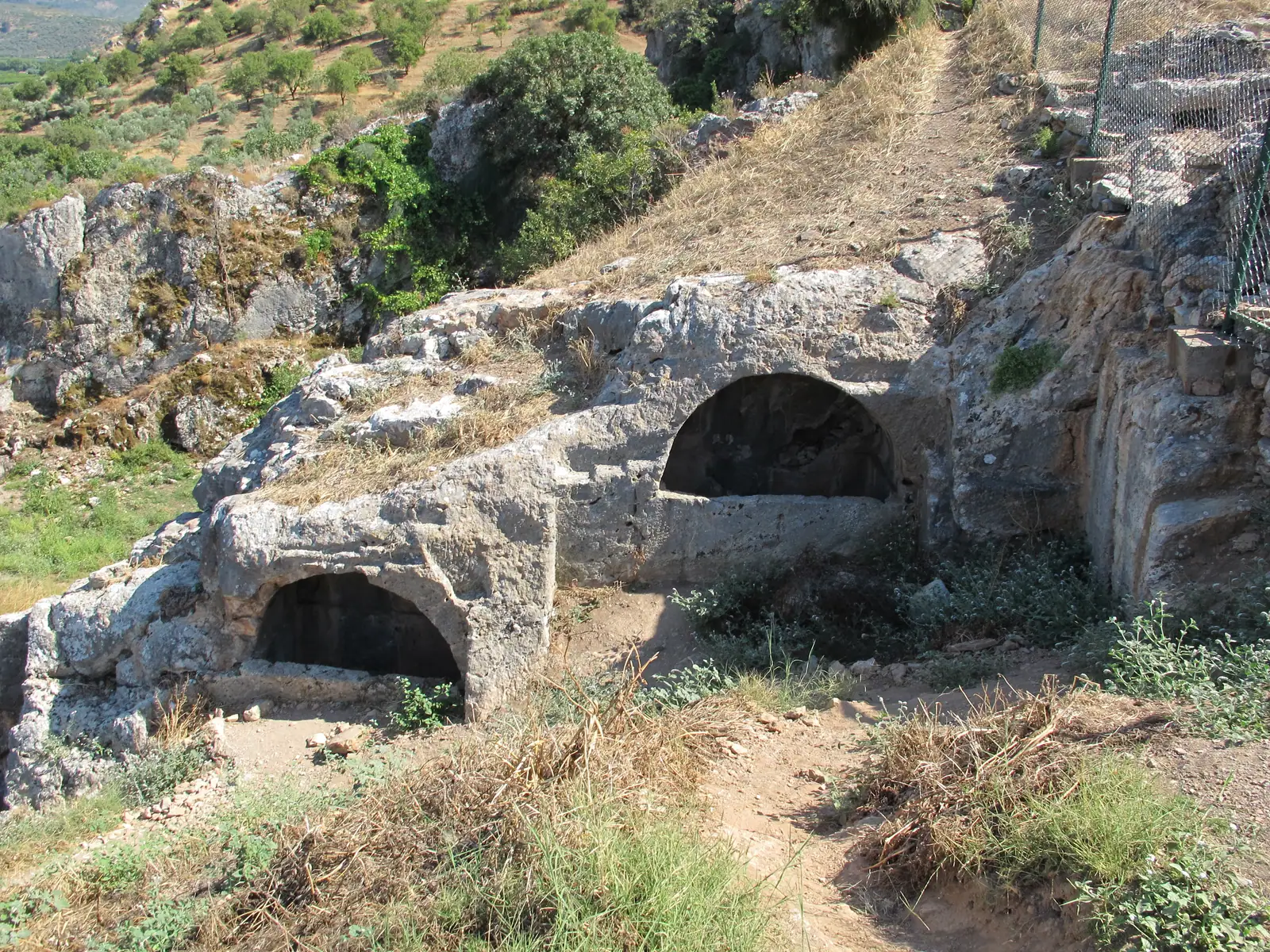
Çukuriçi Höyük is a prehistoric settlement mound and a World Heritage component in its own right, all 1.5 ha of it2. When the first Neolithic farmers settled here, the shore was only some 1.5 km away, close enough for direct access to the Aegean55. After its Neolithic phase, about 6700–5900 BC, the mound lay deserted for over two and a half millennia before people returned around 3300–3000 BC, and it was given up for good around 2750 BC56. After first excavations by the Selçuk museum, systematic research ran from 2006 to 2014 under Barbara Horejs, funded by the Austrian Science Fund and the European Research Council57.

Belevi Mausoleum
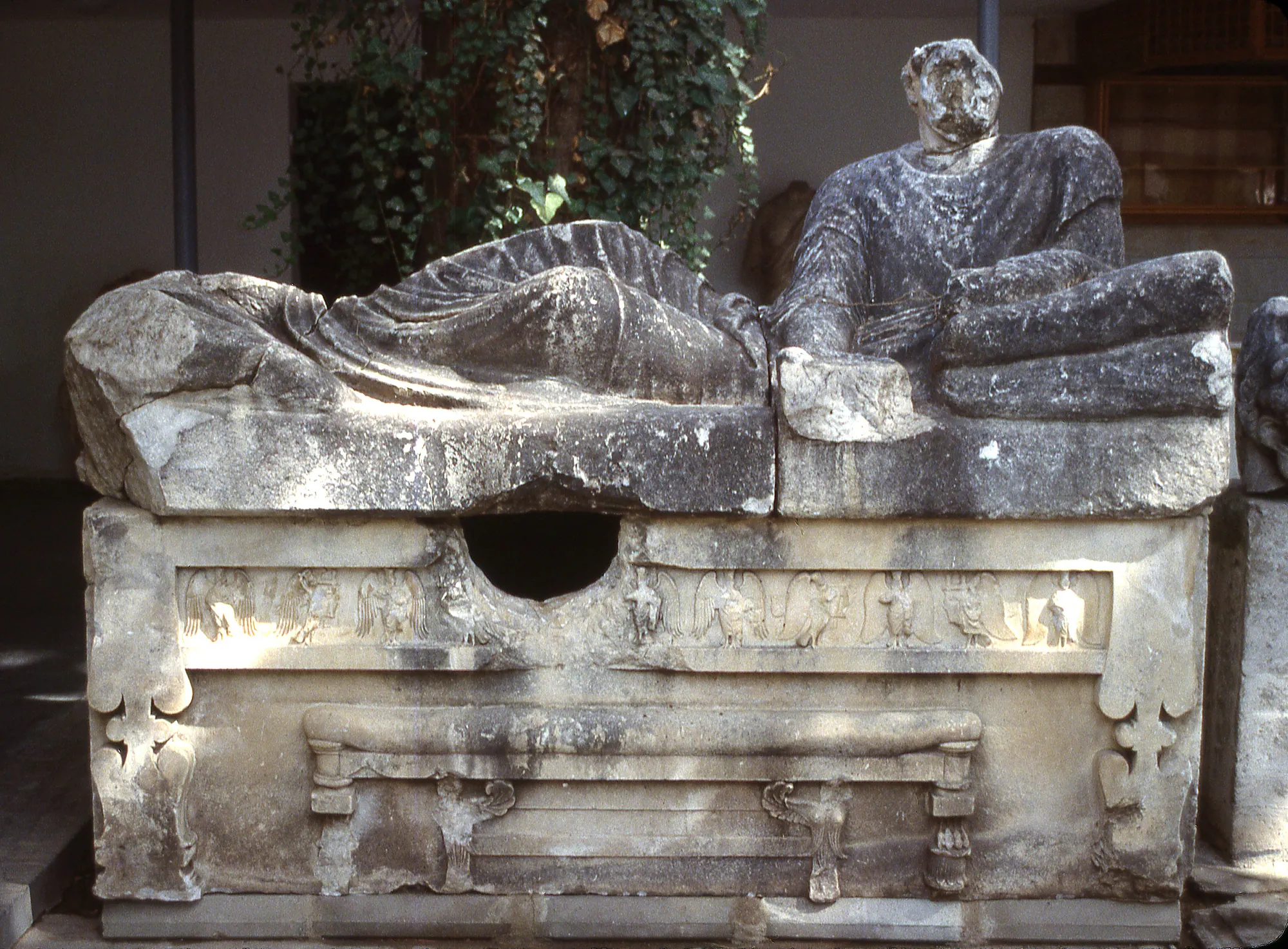
About 14 km north-east of Ephesus stands the early Hellenistic Mausoleum of Belevi, a massive square podium with sides of about 29.65 m, once crowned by a Corinthian colonnade. It is the second-largest mausoleum in Anatolia after the one at Halicarnassus14. Its sculpture, including an unfinished sarcophagus with a reclining figure and reliefs of funeral games and a battle with centaurs, is divided between the Ephesus Museum in Selçuk and the İzmir Archaeology Museum58.
Şirince
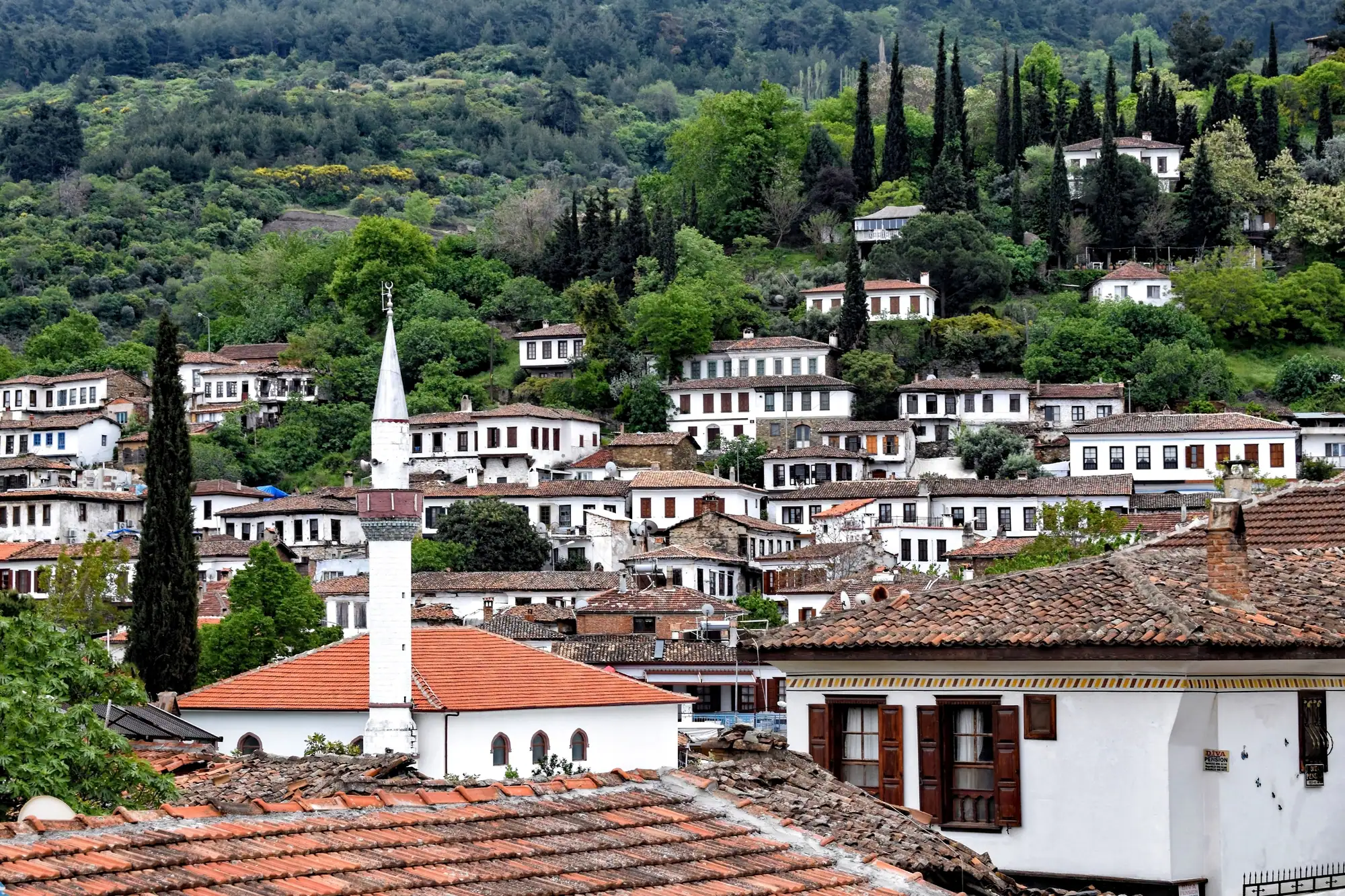
Up in the hills some 8 km east of Selçuk, Şirince has about 450 residents, and in 2023 UN Tourism named it one of its Best Tourism Villages59. Until the early 1920s it was a Greek Orthodox village whose everyday language was Turkish. Most of its Greek families left after September 1922, and from 1924 it was resettled by Muslims from Greece under the population exchange60.
Its name has its own story. The village was called Çirkince, and in the early years of the Republic the governor of İzmir, Kazım Dirik Pasha, ordered it renamed Şirince; the tales explaining the old name, which can be read as “ugly”, are legends61. The Orthodox villagers had already venerated the ruin now known as the House of Mary, with a pilgrimage each 15 August, a custom documented from the 19th century62. Orthodox Christians still traditionally gather at Şirince on that feast day63.

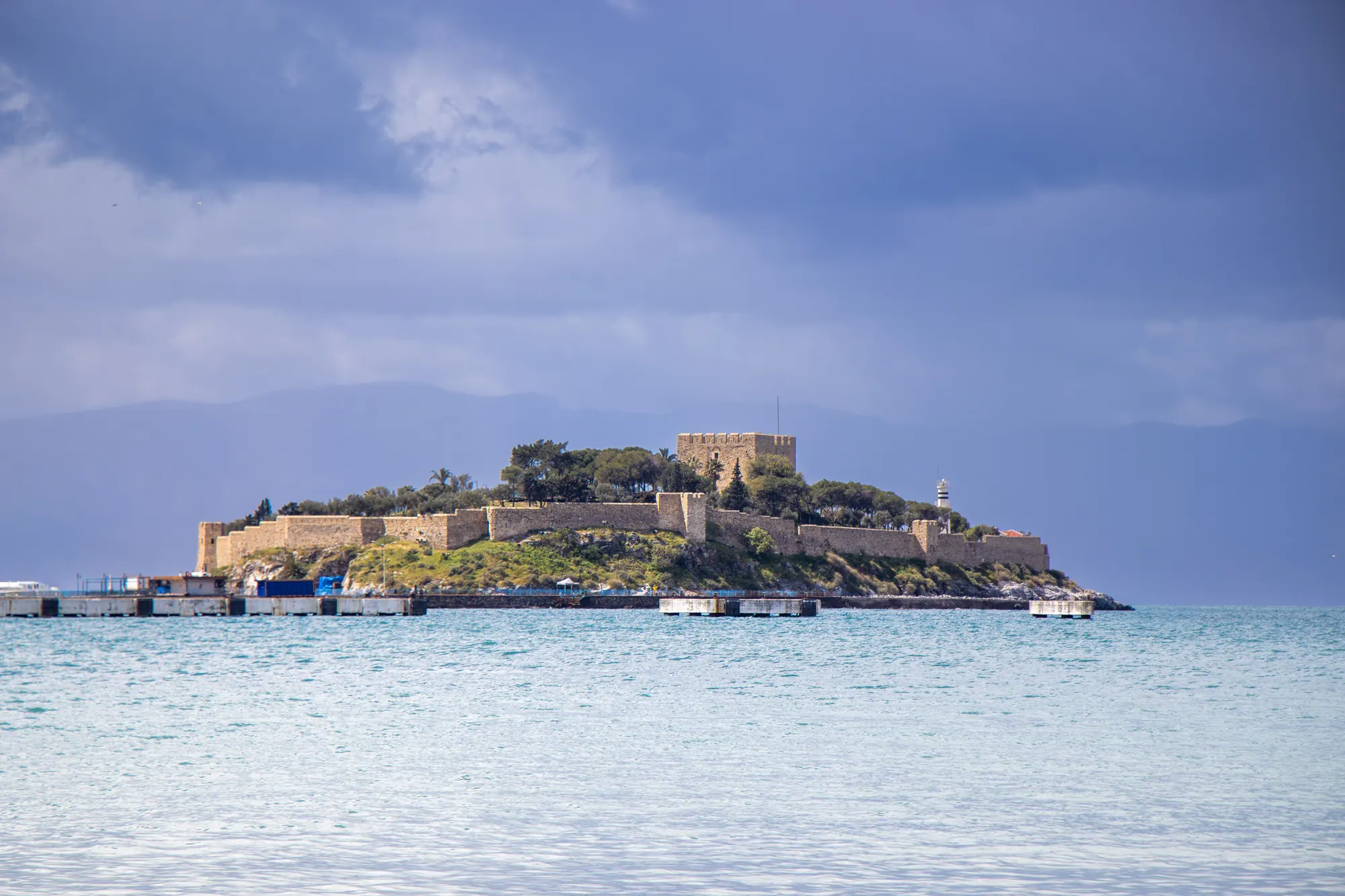
Kuşadası and Pigeon Island
The Kuşadası cruise port lies some 19 km from the Ephesus Lower Gate by road15. Off its shore, joined by a causeway, is Güvercinada or Pigeon Island, whose castle Türkiye’s UNESCO Tentative List entry describes as Genoese: roughly 350 by 200 m, with four towers around a small citadel. The island and the town walls went on that list in April 202064.
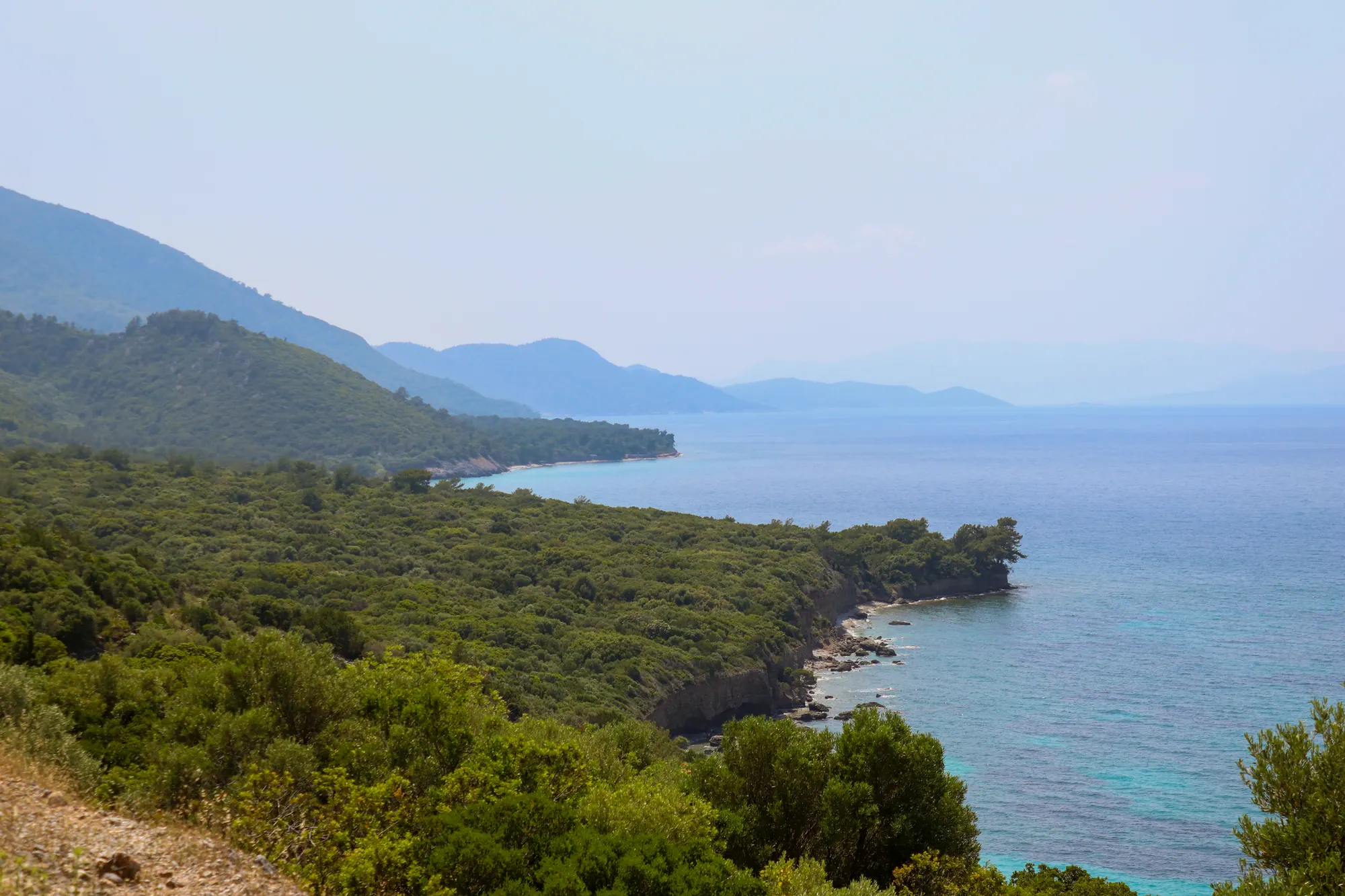
Dilek Peninsula National Park
The Dilek Peninsula–Büyük Menderes Delta National Park covers 27,675 ha: the peninsula was protected in 1966 and the delta added in 1994. Its highest point, Dilek Tepe, reaches 1,237 m, and it lies about 24 km from Kuşadası by road65.
Priene, Miletus, Didyma and beyond

Getting between the sites
The walk from Selçuk railway station to the Lower Gate is about 3.5 km11. İZBAN commuter trains run as far as Selçuk, but anyone coming from İzmir or its airport has to change at Tepeköy to a separate shuttle67. Routes and options are laid out on getting to Ephesus, current prices on tickets and opening hours, and the ground plan on the Ephesus map.

In this section

Temple of Artemis
The Temple of Artemis at Ephesus: the Archaic temple, the fire of 356 BC, the disputed column count, how it was found in 1869 and what is left of it.
House of the Virgin Mary
Meryem Ana Evi above Ephesus: a nun's visions, the 1891 rediscovery, what archaeology dates, what the Church has said, and why Muslims pray here too.
Basilica of St John
The Basilica of St John on Ayasuluk Hill: the tradition of John's tomb, Justinian's domed church, the Gate of Persecution, the castle and how to visit.


Sources
Each source is listed once. The numbers link back to the claims it supports; dates show when the source was checked.
- www.newadvent.org › 05490a.htm 1, 22
- izmir.ktb.gov.tr › stjean-kilisesi-ve-ayasuluk-tepesi-kazisi--selcuk.html 1, 29
- de.wikipedia.org › Johanneskirche_(Ephesos) 1, 24
- web.archive.org › multiple=1 2
- web.archive.org › 1018 2, 6
- whc.unesco.org › 6387 2
- de.wikipedia.org › Ephesos 2, 7
- en.wikipedia.org › Ephesus 2, 5, 10, 26, 27, 28, 30, 31, 32, 38
- web.archive.org › Ephesus 3, 5, 8, 10, 28
- www.blueguides.com › the-shifting-fortunes-of-ephesus-its-rise-and-fall-and-rise 3, 9, 27, 30, 32, 33
- islamansiklopedisi.org.tr › ayasuluk 3, 4, 5, 28, 31
- austriaca.at › 0xc1aa5576_0x001c9934.pdf 3, 5, 8, 9
- turkisharchaeonews.net › selçuk 3, 4, 28
- en.wikipedia.org › Ayasuluk_Hill 3, 31
- www.selcuk.bel.tr › selcuk-belediyesi-tarihcesi 4
- www.visitizmir.org › 243 4
- web.archive.org › paleography.html 5
- www.britannica.com › Ephesus 5
- www.hurriyetdailynews.com › ephesus-ancient-city-meets-sea-again-28358 5
- Kraft, Brückner, Kayan, Engelmann 2007, Geoarchaeology 22:121-149, doi:10.1002/gea.20151 6, 7, 8, 18
- Stock, Pint, Horejs, Ladstätter, Brückner 2013, Quaternary International 312:57-69 6, 8
- www.oeaw.ac.at › ephesos-bio-geo-archive 6
- Strabo 14.1, Loeb tr. 7, 8
- web.archive.org › prehellenistic-ephesos.html 8
- www.oeaw.ac.at › ephesos-pre-hellenistic-settlement-history 8
- www.theoi.com › Pausanias1A.html 8
- Ladstätter 2019, Ephesos from Late Antiquity until the Middle Ages, SoSchrÖAI 58:11-72) [abstract snippet] 9, 10
- web.archive.org › mittelalterforschung.html 9, 10
- www.thebyzantinelegacy.com › ephesus 9, 26
- OSRM car/foot profiles over OpenStreetMap, our query 2026-09-14 11, 12, 13, 15, 16
- www.hzmeryemanaevi.com › location 12, 16
- en.wikipedia.org › House_of_the_Virgin_Mary 12, 43, 45, 63
- en.wikipedia.org › Şirince 13, 59, 60, 61
- tr.wikipedia.org › Şirince 13, 59, 60, 61
- austriaca.at › 7528-5 14
- en.wikipedia.org › Belevi_Mausoleum 14, 58
- anthologiagraeca.org › urn:cts:greekLit:tlg7000.tlg001.ag:9.58 17
- www.livius.org › seven-wonders-of-the-ancient-world 17
- en.wikipedia.org › Temple_of_Artemis 17, 19
- it.wikipedia.org › Efeso 18
- www.worldhistory.org › ephesos 18
- de.wikipedia.org › Tempel_der_Artemis_in_Ephesos 19, 34
- Cartwright 2018 19
- dosim.ktb.gov.tr › muze-ve-oren-yeri-ucretleri.html 20, 66
- izmir.ktb.gov.tr › izmir-ili-muze-ve-oren-yerleri-giris-ucreti-tarifesi.html 20
- en.wikipedia.org › İsa_Bey_Mosque 20
- Ohnesorg 2007, Der Kroisos-Tempel, Forschungen in Ephesos XII/4, ch. I, ÖAW 21
- 19 Feb 2023 21
- de.wikipedia.org › John_Turtle_Wood 21
- en.wikipedia.org › John_Turtle_Wood 21
- web.archive.org › Saint-John-the-Apostle 22
- www.newadvent.org › 0103303.htm 22
- www.newadvent.org › 250105.htm 22
- kar.kent.ac.uk › LAAJ_009_11-Karydis.pdf 23
- www.kulturportali.gov.tr › ayasuluk-tepesi-ve-st-jean-aniti-oren-yeri- 23, 25, 29
- turkisharchaeonews.net › basilica-saint-john-and-ayasuluk-fortress 23, 25, 29
- www.romeartlover.it › Efeso5.html 24
- en.wikipedia.org › Aydinids 26, 27, 30, 31, 32
- islamansiklopedisi.org.tr › isa-bey-camii--izmir 28
- en.wikipedia.org › İsa_Bey_Mosque 28
- islamansiklopedisi.org.tr › aydinogullari 31
- en.wikipedia.org › Junayd_of_Aydın 32
- www.oeaw.ac.at › Forschungsgeschichte_Ephesos.pdf 33
- turkisharchaeonews.net › ephesus-museum-selçuk 34
- turkisharchaeonews.net › public-buildings-north-state-agora-ephesus 35
- de.wikipedia.org › Ephesos-Museum_Selçuk 35, 38, 39
- de.wikipedia.org › Prytaneion_von_Ephesos 35
- tr.wikipedia.org › Efes 35
- muze.gov.tr › muze-detay 36, 37, 58
- en.wikipedia.org › Ephesus_Archaeological_Museum 36
- tr.wikipedia.org › Efes_Müzesi 37
- turkisharchaeonews.net › temple-hadrian-ephesus 38
- de.wikipedia.org › Hadrianstempel_(Ephesos) 38
- turkisharchaeonews.net › domitian-square-ephesus 39
- turkisharchaeonews.net › state-agora-ephesus 39
- www.khm.at › arete-kelsou-51900 40
- www.oeaw.ac.at › preserving-world-cultural-heritage-austrian-researchers-star 40
- turkisharchaeonews.net › library-celsus-ephesus 40
- www.worldhistory.org › Library_of_Celsus 40
- www.austriaca.at › 0xc1aa5572 0x0014a7d8.pdf 41, 42, 44, 45, 46, 62
- de.wikipedia.org › Haus_der_Mutter_Maria 41, 43, 44, 46, 62
- en.wikipedia.org › Anne_Catherine_Emmerich 42
- turkisharchaeonews.net › house-virgin-mary-ephesus 43
- en.wikipedia.org › Tomb_of_the_Virgin_Mary 44
- fr.wikipedia.org › Maison_de_la_Vierge_Marie 45
- www.hzmeryemanaevi.com › en 46
- OpenStreetMap nodes: Lower Gate 37.9454,27.3421; Upper Gate 37.9355,27.3462; Selçuk station 37.9509,27.3729 47
- en.wikipedia.org › Cave_of_the_Seven_Sleepers 47
- www.newadvent.org › 05496a.htm 48, 49
- www.kulturportali.gov.tr › yedi-uyuyanlar-magarasi 48, 51, 52, 53, 54
- en.wikipedia.org › Seven_Sleepers 48, 49, 50, 51, 52, 53, 54
- api.alquran.cloud › en.sahih 50
- doi.org › cbo9780511599491.003 50
- doi.org › ejoss_v03i1004 50
- turkisharchaeonews.net › grotto-seven-sleepers-ephesus 50, 52, 53
- digitalwindow.vassar.edu › 3 50
- api.alquran.cloud › en.sahih 51
- www.ebi.ac.uk › fullTextXML 55
- journals.ed.ac.uk › 6893 55, 56, 57
- Stock et al., Neolithic settlement sites… Çukuriçi & Arvalya) [abstract snippet; page 403] 55
- en.wikipedia.org › Çukuriçi_Höyük 55, 56, 57
- defc.acdh.oeaw.ac.at › cukurici-movie 56, 57
- www.ikakla.uni-halle.de › 3414769_3515270 57
- de.wikipedia.org › Mausoleum_von_Belevi 58
- dergipark.org.tr › 4430684 59, 60, 61
- www.selcuk.gov.tr › sirince 59, 60, 61
- de.wikipedia.org › Şirince 60, 61
- www.aa.com.tr › 2661431 63
- www.katolik-kilisesi.org › 15-agustos-meryem-ananin-goge-alinis-bayrami-icin-efes-merye 63
- web.archive.org › 6468 64
- en.wikipedia.org › Güvercinada 64
- dergipark.org.tr › 3798112 65
- www.sciencedirect.com › S187704281101247X 65
- en.wikipedia.org › Dilek_Peninsula-Büyük_Menderes_Delta_National_Park 65
- tr.wikipedia.org › Dilek_Yarımadası-Büyük_Menderes_Deltası_Milli_Parkı 65
- www.tursab.org.tr › 3ce94ed3-2265-4180-8a87-594371bcf0b5.pdf 66
- www.izban.com.tr › SeferSaatleri.aspx 67
- en.wikipedia.org › Selçuk_railway_station 67
- en.wikipedia.org › İZBAN 67